Why We Say Women and Gender-Expansive People
For over 50 years, "Our Bodies, Ourselves" has been “A Book by and For Women.” It is still deeply woman-centered and will remain so. At the same time, Our Bodies Ourselves has expanded the tent to include people with various gender identities or expressions other than “woman” who use our resources.
For example, many trans men will find relevant information about menstruation, reproduction, and heart health. It’s critical to our mission to include gender-expansive people. This inclusivity doesn’t in any way marginalize cis women. Rather, we aim to enlarge the collective “we” in “Ourselves.”
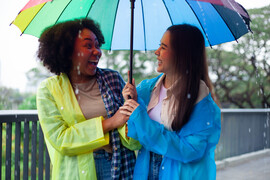
Our Bodies Ourselves provides information and resources for people of all ages and identities. “Gender-expansive people” is an umbrella term that includes all whose gender identity, experience, and/or expression lies outside the typical expectations of society. Gender-expansive people may identify as female or male. They may also identify with more than one gender (gender fluid) or with no gender (agender). Some of the identities that may fall under the “gender-expansive” umbrella include trans, transgender, trans-feminine, trans-masculine, two spirit, womxn, bigender, boi, butch-of-center, butch, demiboy, demigirl, fem, femme-of-center, femme, gender-nonconforming, gender-variant, genderqueer, intersex, non-binary, pangender, questioning, stud, as well as a wide range of culturally-specific terms such as muxe (Mexico) or burnesha (Albania).
The language people use to convey identities can be very personal and may be a sensitive issue. Gender-related terminology is also in flux and varies by context and by individual. It would be impossible to list all the gender identities that are important to people who might use Our Bodies Ourselves. “Women and gender-expansive people” is the phrasing we chose to include as wide a range as possible.