Sex Work and Sex Trafficking, and Why the Differences Matter
Many people think of these terms interchangeably, but there are important differences among them. Since some of our content refers to one or more of these areas, we’d like to clarify the differences.
Sex Trafficking is a human rights atrocity in which socially marginalized people (overwhelmingly women and girls, including trans women and girls) are sexually exploited through coercion, fraud, and force. Sex trafficking is a form of human trafficking, the economic exploitation—enslavement, indentured servitude—of people through force and coercion. The trafficker buys, sells, moves, and restricts the movement of the trafficked people, in order to make money from their sexual abuse. Sex trafficking is a global scourge, but women and children are trafficked for sex within countries as well. Sex trafficking is one of the most widespread and lucrative illegal “industries” in the world.
Other forms of sexual oppression can also be understood as forms of sex trafficking. For example, child marriage, in which a young woman or girl is traded by her family into marriage, is not typically thought of as a form of trafficking. Yet the powerlessness of the young women and girls to control their fate, and the way that their sexual exploitation is central to the arrangement, makes it important to consider.
Much is known about how people are trafficked, but there is also alarmist misinformation that circulates widely on the internet. This misinformation is often motivated by political agendas unrelated to human rights (e.g. “Q-Anon”), as well as by well-meaning people. Unfortunately, these viral “reports” fill trafficking hotlines with false claims, lead to unhinged behavior by concerned citizens, pull attention and resources from real anti-trafficking organizations, and divert law enforcement and social services personnel from real victims.
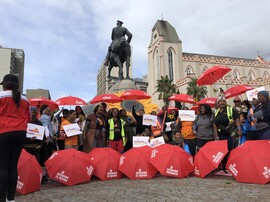

Unlike sex trafficking, sex work and prostitution describe arrangements that are not entirely (or not at all) coerced. Sex work covers a larger range of arenas in which primarily women are paid for their sexual services. For example, stripping, phone sex, being an escort or dominatrix, the many roles in the vast porn industry, and “turning tricks” in a brothel and/or for a pimp are all types of sex work. Prostitution is the narrower term, which includes trading sex for money, food, drugs, or a place to stay.
As with all kinds of work, sex workers’ experiences are varied. A lucky few have autonomy over the conditions of their work, while many more experience degradation and exploitation. Because sex work is illegal in most countries, it is very difficult to find reliable statistics about how autonomous or oppressed sex workers are; it’s safe to say that the majority of sex workers are on the heavily exploited side of the spectrum. It is typical for street-level sex workers to be impoverished, homeless, repeatedly traumatized, and drug using. Most trade sex for drugs, money, or a place to stay, and regularly endure abuse at the hands of pimps, “players,” customers, and police.
The distribution of sex workers along the spectrum, from autonomous to exploited, is based on many factors, including each person’s race, class, gender, age, ethnicity, and other forms of privilege and vulnerability. So, a white, middle class, able bodied young woman with a college education and good teeth, who is slim and blonde, has a much better chance of negotiating the conditions of her work than someone who is socially, economically, racially marginalized and very young.
Still, there is a wide range of experiences among sex workers. For many women and gender-expansive people, forms of sex work can provide a living that is preferable, at least for a time, to non-sexual alternatives which can be even more exploitive, degrading, and poorly paid.

Disputes within feminism
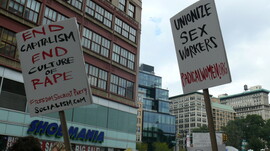
Many feminists reject the term “prostitution” because of its stigmatizing, moralizing, and criminalizing implications. They prefer “sex worker,” because it describes a job, not a person. Further, as workers, people have rights and should be treated with dignity. Sex workers have organized at least since the 1970s, campaigning for legal rights, better working conditions, and an end to stigma.
Other feminists reject the term “sex worker,” because they believe it masks and normalizes the inherently exploitive nature of prostitution. Instead, they refer to the industry as “commercial sexual exploitation.” They see prostitution as an exchange in which women are objectified and violated by men in an archetypal enactment of patriarchal abuse. These abolitionists want to see an end to the industry. They refer to “prostitutes” and “prostituted women.”
Our Bodies Ourselves strives to use the most respectful, supportive, and accurate language when writing about women and gender-expansive people working in the sex industry. We use the term “sex work/ers” both because it’s less stigmatizing and because it points to the possibility of harm reduction within the “industry.” We condemn trafficking in all its guises, along with every other human rights violation.
At the same time, we believe in favorable conditions of work for everyone, regardless of workplace or industry. We advocate for poverty relief, housing, health care, non-discrimination, and the fulfillment of all other human rights, so that no-one is forced to “choose” terrible work—in or out of the sex industry—just to survive.
We also support the rights all people, including sex workers, to live free of stigma, exclusion, discrimination, and criminalization; to plan for our futures; to be sexual how and with whom we choose, including for pay; and to organize for and demand our rights. Our Bodies Ourselves is proud to have current and former sex workers among our content experts. We honor sex workers and former sex-workers as part of our community.