Sex, Gender Identity, and Sexual Orientation
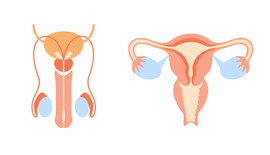
Sex? Gender? These two words are often used interchangeably, but there are distinct differences. Sex is based on a person’s genitals (clitoris, vagina, penis) and reproductive organs (ovaries, uterus, testicles). These anatomical details are thought to define a person as male or female. If the person’s anatomy is not clearly or exclusively male or female, a person is said to be intersex, which is sometimes called having a disorder of sexual development (DSD).

Gender refers to gender identity, meaning our internal sense of ourselves as female, male, or something else, regardless of biology. Gender also refers to gender roles or expression, most often to behaviors and roles considered masculine or feminine in a particular culture at a particular time.
A shortcut way of understanding the difference between gender and sex: Sex is between your legs; gender is between your ears.
Gender Identity: Who We Know Ourselves to Be
In U.S. culture, gender is believed to follow directly from one’s biological sex, so a baby born with a vulva is considered female, called a girl, and expected to grow up to be a woman who acts, dresses, and talks in a manner considered by the culture and her community to be feminine. A baby born with a penis is considered male, called a boy, and expected to grow up to be a man who acts, dresses, and talks in a manner considered to be masculine. In this binary way of thinking, our genitals, not our internal sense of self, are the deciding factor. Many people challenge the expectation that our biological sex should dictate our physical, emotional, and psychological attributes. What if being a woman isn’t about having a vulva (or not having a penis)? What if people don’t fit neatly into male/female and masculine/feminine boxes?

Our gender identity and/or gender expression may shift over time. An increasing number of feminists and other activists are advocating for the expansion or elimination of either-or gender norms, in order to allow for a full range of human behavior and expression. Knowing that gender is separate from sexual anatomy enables us to express ourselves in ways that may conflict with how society dictates we should look and act.

Confusing Sexual Orientation and Gender Identity
Many of us confuse gender identity and sexual orientation. Gender identity is about who we are, while sexual orientation is about who attracts us. Being cisgender or transgender does not predict whether a woman will be straight, bisexual, or lesbian. The confusion of gender identity with sexual orientation gives rise to misleading stereotypes. For example, some people assume that if a woman is a lesbian, she must have a masculine gender expression—in other words, she keeps her hair short, wears no makeup, and dresses like a man. Likewise, we might assume that because a woman appears masculine, she must be a lesbian. But being lesbian or bisexual doesn’t mean our gender looks or feels a certain way.