Mental Health through a Feminist Lens

We use the term “mental health” even though Our Bodies Ourselves doesn’t endorse all the meanings that it implies. One main reason we use the term is that we want our users to find us; “mental health” is the most common search term for resources about people’s mental, emotional, and psychological states.
Our Bodies Ourselves offers a broad critique of the mental health field, as well as resources to help users who are, or whose loved ones are, suffering from very real mental and emotional pain and disabilities. We believe that each person is an expert on her/their own mental health, and that each of us deserve to live at the highest possible level of inner peace, equilibrium, joy, self-love, connectedness, and fulfillment.

The roots of psychiatry lie deep within patriarchy as well as in religion. These intertwined belief systems have had, and continue to have, profound negative effects on our mental health. Both religion and the mental health professions have harmed countless women and gender-expansive people. At the same time, very many of us have benefited from spiritual practices and communities, psychotherapy, and other forms of mental health treatment. Feminists continue to challenge the false views of women as the inferior or cursed sex. We reject the premise that trans people are inherently broken. And we are out of patience for the ancient and tenacious belief that women are deceitful temptresses whose main role should be pleasing and serving men.
The history of sexism and racism in the fields of psychiatry and psychology still weighs heavily on our society’s shared beliefs about mental health. For centuries, doctors diagnosed women with hysteria, a “female” psychological disorder supposedly caused by an unstable uterus. The concept of hysteria mirrored perceptions of all women as naturally irrational and ruled by their emotions. Today, the “psych” professions continue to medicalize women’s suffering.
Psychiatry and psychology also miss the mark by locating mental illness solely within the individual. They focus on symptoms, labels, diagnoses, genetics, biology, and “distorted thinking.” This approach overlooks environmental factors like poverty, racism, violence, patriarchy, and other forms of oppression that affect our psychological health.
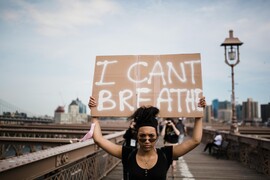
Our Bodies Ourselves believes that effectively preventing, diagnosing, and treating, mental illness needs to take women’s and gender-expansive people’s lifetime incidences of sexual abuse, harassment, and sexual assault into account. Mental health treatment needs to recognize how women bear the heavier burden of caring for children, elders, and families. Mental health professionals and institutions should regard our responses to our environments, stressors, and traumas as understandable and often adaptive. And they should recognize that the lack of respect for human rights, including a social safety net, diminishes our equilibrium and ability to cope as well as our physical health.
Mental health care, like all care in the U.S., is stratified by class. Those who can pay may be able to find competent and caring clinicians; those who can’t pay typically get either little or no care or else coercive treatment that is available only when we are in crisis. In addition, the United States has a massive deficit of mental health providers at every level of care including generalists and specialists, psychotherapy and psych hospital beds, social workers and psychopharmacologists.

Feminists have challenged all of these aspects of psychology and psychiatry, from within the mental health professions and as survivors of them, since the late 1960s. Feminist therapies have long focused on the lived experiences of girls and women and the ways that specific forms of oppression and marginalization, misogyny, sexism, and patriarchy inhibit our flourishing. Sadness, anger, fear, unwellness, withdrawal, and even aggression look very different when placed under a feminist intersectional lens.
Many feminists have created and embraced non-traditional approaches to healing. Some of these approaches emphasize activism and solidarity with other women as a pathway to health and wellbeing, trusting in mutual aid rather than conventional, hierarchical processes. Others build on relationships and relationality. Others work to return power to clients, focusing on clients’ strengths rather than pathology, and treating clients as capable partners in treatment. Still others involve advances in approaches to distress caused by traumatic events and environments.
The individualistic approach to mental health remains dominant, however.
Over recent decades, as “wellness” has become a multi-billion-dollar industry, an overemphasis on happiness and “positivity” has become especially burdensome for women. “Wellness” attitudes and practices can be wonderful and nurturing, but they also have a troubling side—burdening women and gender expansive people with the mandate to continuously improve and optimize ourselves physically and mentally. In the wellness world, therapy, medication, gratitude, “clean” eating, and various forms of often expensive “self-care” can become a second (or third, or fourth) job. This worldview promises healing in body and mind, wholeness, serenity, slimness, and spiritual oneness with the divine, all of which can be incredibly appealing in our extremely stressful lives with inadequate mental health care, economic insecurity, rampant social injustice, and global climate crisis.
But the promises of wellness are not always fulfilled. Some common sense practices seem harmless or good for our mental health, such as moderate exercising, deep breathing, and meditating. Others can actually make us feel worse, as we blame ourselves for our failure to achieve the “wellness” that was promised. Some wellness disciplines, whether psychological, attitudinal, or nutritional, are actually dangerous. Many of us have spent untold time and money on supplements, “cleansing” dietary regimes, spiritual healers, and attempts at positive thinking that have failed to improve our mental health. Just like mainstream approaches, wellness approaches have real costs, in time, money and paths not taken.

Our Bodies Ourselves highlights how race and gender intersect to explain our concerns, problems, and adaptations to difficult and hostile environments. Our Bodies Ourselves sees mental health against this backdrop and we see well being as an ever-changing state of internal balance that enables individuals to flourish and live lives of our own design without causing harm to others. Whether or not we have a diagnosed mental illness, all of us have the right to the life conditions, knowledge, treatment, and caring relationships that support, protect, and improve our mental health.
Because of these guiding principles, our mental health resources also:
- Follow the language of those who experience mental suffering. This may mean using person-centered language, such as “a person with a diagnosis of depression.” It may mean diagnosis-first language, such as “a depressed person.” We avoid diagnosis-centered language, such as “a depressive,” to refer to a person experiencing depression. We also support everyone’s right to define their own experience with mental health as they choose.
- Reject stereotypes about the mental health of women and gender-expansive people.
- Counter destructive myths about people diagnosed with, or believed to suffer from, mental illness. We affirm that those deemed mentally ill are as valuable and deserving of respect as anyone else in society.
- Prioritize evidence-based research, but it is not the only standard we use for inclusion in Our Bodies Ourselves. Most people lack access to research grants and the relationships with prestigious institutions which are necessary to producing evidence-based research findings. Those of us in marginalized groups, including those diagnosed with “mental illness,” are typically shut out from contributing to research about ourselves. This unfairly favors those with mainstream views about mental health and helps maintain those views.
- Oppose coercive “treatments” that deprive us of our right to self-determination.
- Explore the social determinants of both psychological suffering and psychological thriving.