Women and Ageism
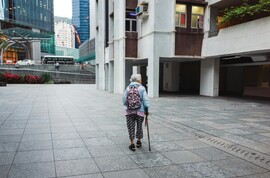
Ageism is discrimination against people based on age. While in some settings it refers to bias against the young, it generally refers to discrimination against those who are seen as “old.”
Ageism is about power, exclusion, and who is valued in society. Ageism includes but goes beyond individual interactions; it is structured into social institutions like the healthcare system and the workplace.
Women and gender-expansive people are especially subject to ageism in all these realms. Age relations are power relations based on age, just as gender relations are power relations based on gender. This means that younger people benefit from ageism whether they want to or not—just as men benefit from sexism, or white people benefit from racism. Yet, unlike most other forms of inequality, all of us will experience aging—and ageism—if we live long enough. Ageism is so deeply embedded in our society that it’s rarely recognized as an “ism” at all.
Ageism can be internalized, interpersonal, institutional, or structural. Internalized ageism is when we believe the stereotypes about aging and old people, and let them impact our self-image and limit our behavior. One example is believing our natural aging process makes us less attractive. Interpersonal ageism is when people discriminate based on their perception of someone’s age. For an extreme example, older women face high rates of family violence, which often goes unrecognized.
Institutional ageism is when an institution such as a workplace, school, or religious community limits involvement based on age. One example of ageism in healthcare is the lack of attention to depression in older women, based on the stereotype that it’s normal for us to be unhappy as we age. Finally, structural ageism is when laws and policies lead to negative outcomes for elderly people. One example is the way that Social Security excludes waiters, house cleaners, sex workers, and others working in female-dominated jobs, which leads to poverty in old age. At all of these levels, ageism can intersect with other forms of oppression, creating cumulative disadvantage for elderly people.

Workplace and economic discrimination against women accumulate over a lifetime to create insecurity and poverty in old age. Low lifetime wages, caregiving responsibilities that periodically take women out of the workforce, negative impacts of divorce, and sexist Social Security policies are some of the factors that contribute to the feminization of poverty in older women. In addition, discrimination against older workers has particular impacts against women and limits our ability to earn a living and get and keep employment as we age.
In the U.S. especially, children and adults alike are conditioned to be ageist. Unfortunately, old people, especially women, are often viewed as unattractive or even repellant. So, older women and femmes are vulnerable to our economy which thrives on the notion that being “forever 21” is an asset. Social media only intensifies this problem. We’re encouraged to look young by buying products or undergoing procedures that will youth-ify us. “You don’t look your age!” may be intended as a compliment. But is it really?
We praise older people for being “young at heart,” implying that there is one best way to be, and it is not old. Older women are praised mostly for looking “great for her age.” Being young is seen as the norm, even though as humans it’s normal to go through the entire lifespan, and there’s no rational reason for being old to be seen as “other.” Older people often try to defy the stereotypes in order to maintain status and value. Perhaps we hope that if we don’t fit the stereotype of being old, we can avoid being subjected to ageism. But what if we don’t fit this positive image of old age? Why should looking or acting our age justify loss of social connections or status?
Ageism affects us differently depending on our life stage. For women who are “young-old”—those of us who may be retired but who are basically healthy, independent, active, and mentally with-it—ageism may start with being ignored, de-sexualized, or talked down to. As we enter the life stage of being “old-old”—chronically ailing or disabled, more dependent on others for care, mentally less coherent—the ageism we face ratchets up as well. In addition to invisibility, we may find ourselves vulnerable to disrespect and mistreatment from a variety of quarters. Especially if we don’t have family nearby to advocate and care for us, we become vulnerable in a whole new way. This vulnerability is multiplied among those of us who are further marginalized for example by virtue of our race, sexual orientation, or poverty.
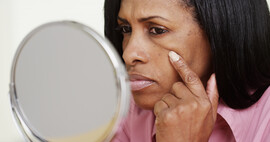
The meaning of old age is contested and differs greatly for men and women. Men gain in status as they age, until the point where they are old-old. Women, on the other hand, start losing status much earlier, as they “lose their looks” and conform less closely to sexist ideals of beauty. This form of “looksist” ageism has a lot of overlap with all the forms of oppression that base women’s value on appearance, including racism, ableism, fat-phobia, and transphobia. The taboo against women aging creates a huge market for products and procedures that claim to make us look younger. Depression and chronic illness in older women are both more common and stigmatized, leading to added discrimination and devaluing of aging women.
Being perceived as old can also be based on life course milestones, biological markers, or functional decline. Is it when our hair turns gray? When we retire? When we become grandparents? If we have some physical or cognitive limitations? The point at which we are considered old depends on the meanings we ascribe to all these factors.
When we’re considered old also depends on the context in which we’re seen. We might be considered old in our workplaces, but not when we’re at home. Some groups may be considered old sooner or later than other groups, depending on cultural norms and notions. And some groups within the broader U.S. culture are more likely to respect the elders in their communities. “Oldness” for women is affected by intersectional factors. Our race, ethnicity, and identity are all factors that intertwine with age. For example, the experience of discrimination is magnified for an older person of color or for an LGBTQ elder. But regardless of when or where we are seen as old, the outcome is the same: we are excluded and devalued.
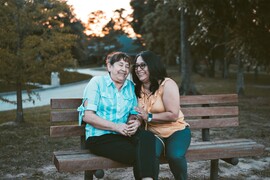
Overcoming ageism and its impact on women and gender-expansive people requires work on many fronts. To become free of ageism, we need to advocate for political, policy, and cultural change that reduce inequalities so that we’re more equal at old age. Until we see the value of old age reflected in the broader mainstream culture, respected in our institutions, and addressed in our politics, policy, and economic structures, ageism will persist in our society. People’s mental processing speed wanes as we age, but it’s a good thing that as women grow older, we become more assertive (as men become less assertive), and wiser (as do men). We can use these strengths to help make the changes we need. Let’s embrace ourselves and support each other. Let’s age consciously, create new narratives, and recognize the wisdom we’ve achieved that comes with living a long life.