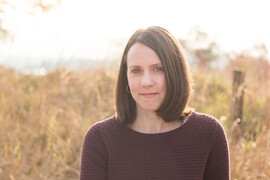
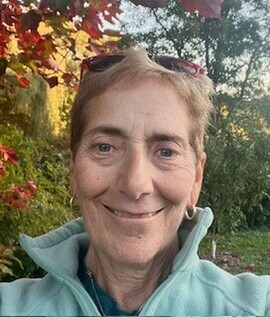
Mindy Fried: One of the biggest worries older people have is finances. Will we have enough to live? And we don’t like to say it - but the end of that sentence is - until we die. Is there enough to pay the rent or the mortgage, to pay our medical bills? To pay for a funeral? To support spouses or partners if they get sick, or to help our kids or grandkids. The level of our financial security early in life is connected to our financial stability in later life.
In this episode, we'll meet Linda Keene, a retired businesswoman who has found meaning in retirement through her art. And we'll talk to researchers who make the connection between women’s experiences in the workplace - both good and bad - and how this links to later financial stability and life satisfaction.
[theme music]
Welcome to Next Chapters, a new podcast that explores the remarkable landscape of growing older for women – from relationships and sexuality to health care, housing and retirement. Next Chapters is proudly sponsored by Our Bodies Ourselves, a globally renowned resource for the health and sexuality of women and gender-expansive people. I'm your host, Mindy Fried.
[music ends]
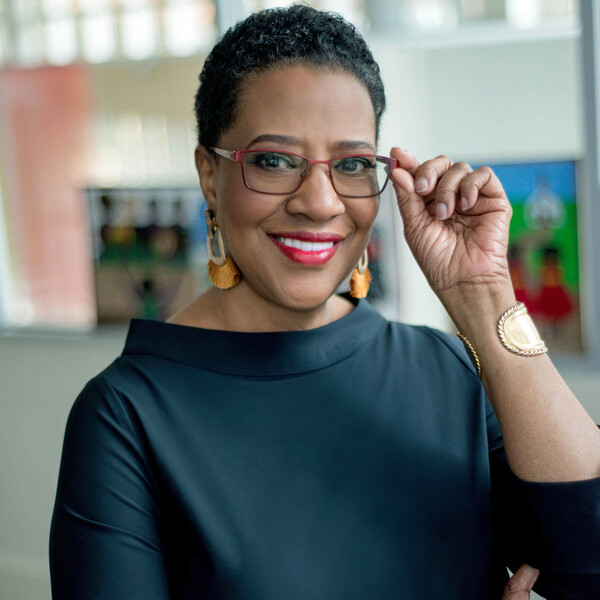
I’m going to start this episode by talking with Linda Keene. Linda has a fascinating career trajectory. She earned her MBA from Harvard and had a corporate career in marketing for some of the most recognizable American brands: Gillette, Pillsbury, American Express, and the children’s publishing company, Scholastic. She left corporate life and went to the non-profit sector, taking a job as the CEO of a regional Girl Scout council. And then a few years ago, she decided to retire.
Linda has described herself as – quote, “a woman who spent the majority of my career pushing the glass ceiling with my head.”
Linda Keene: I was going to say that.
Mindy: So, tell me, what was that?
Linda: Well, in almost every corporate role I had, I was either the first African American or the first female, or the first African American female. So that's what I mean by pushing the glass ceiling with my head. When I went to business school in the mid-70s, there were very few women getting MBAs. You know, my class at Harvard was 800 students, 10% were women. So, there were about 80 of us and they broke you up into sections, you know, in class sections, which are groups, they went through with all your classes. So, they divvied us up. So, we had basically eight women per section. And then there were about 25 African Americans in my class of 800 total.
Mindy: Wow. Okay.
Linda: And of the African Americans, about half were female. So there were, you know, about 12 of us who were two-fers, so to speak. So even at that time, there hadn't been very many women at Harvard. I think the first women were admitted to the MBA program in the mid 60’s. So, we were only about 10 years in. And it was considered a rarity even at that time to be getting an MBA, to be getting an MBA at Harvard. So that was definitely one of those experiences that was a, “pushing the glass ceiling with my head”. And I will say for the first time in my life, I experienced, I think, more challenges as a woman than I did as an African American.
Mindy: Now, what do you mean by that?
Linda: As a woman, there were very few men in the class who felt like women belonged there at that time. And that was true of a lot of the faculty members as well. I mean we were such a novelty. For example, the way that they do instruction at Harvard is you get a case study, and you read up on it. And then the next day you go to class, and you provide your analysis of the case study. Typically, what a professor would do is call on one student in the beginning to do what they call lay out the case. And then the class discussion for the rest of the period kind of branches off of that.
Very few of the professors would call on a woman first. Many professors said, well, it's a lot of pressure. We don't want the women to break down. We don't want them to cry. I mean, all kinds of sexist kinds of reasons. And we were saying, but by not letting women do that, you disadvantage us because we never get that opportunity to basically show off. And I remember the first time that I was able to open a case, the professor asked, well, first he asked a man who was sitting on one side of me. Then he asked a man who was sitting in front of me, who weren't prepared. And then finally he asked me, and I think I must have talked for about 40 minutes straight because I had never had that opportunity before.
Mindy: You're gonna make up for all the time that women weren't invited.
Linda: And so that was one issue. Icing you out or ignoring your contribution was very common as well. And so, one of the things that the women used to do for each other, we would deliberately, if we got to talk, say, “as Holly said”, or, “as Linda said”, so the whole time I was there, it felt like I was pushing the glass ceiling with my head.
Mindy: Yeah, yeah, I get the image now. Then, you, you worked in the corporate sector for 25 years and I found this other quote from you where you say, I also know that we are still underrepresented in the halls of power. One of the best ways to change this trajectory is to invest in giving girls opportunities to develop their leadership skills and self-confidence. So is that, was that kind of what motivated you to then work with the Girl Scouts? How did you land there?
Linda: Well, you know, when I decided that I really didn't want to continue pursuing a corporate career, I looked at other avenues that had been very satisfying to me. And I was very clear about the kinds of organizations that I wanted to work in. And they were organizations that primarily dealt with women and children. And I had about 10 people send me the Girl Scouts job description before I had ever found it myself and said, this sounds like you. And I think, you know, I really believe in representation. And if you don't see anyone like you doing a job, it's hard for you to say, well, I can do that. So, it's very important for girls to see role models and to be encouraged to participate in a broader way if they have an interest in doing that.
Mindy: And so you were in that job, if the internet is correct, you were in that job for eight years, right? And was it from that job that you chose to leave the paid workforce?
Linda: Yes. You know, when I took the job, I told them that you have a CEO who is approaching retirement age. My counsel was very supportive, and they kept saying, well, we don't think of you that way. I said, but I think of me that way, and one of these days, I'm going to feel like it's time for me to move on. My husband was already retired, and I felt like I wanted to be able to enjoy the next part of my life while I had health and strength and while he was well as well. And so, I decided to retire.
Mindy: I want to pause Linda’s story for a few minutes here, because not every woman – and especially not every woman of color – is able to choose how and when they’re going to retire. That’s because women still do not make equal pay when compared to white men.
Kendra Jason: Women can go through these programs, women can get the training, women can get the education, women are getting degrees at some of the highest rates ever. But once they hit the workplace, there's that glass ceiling because of the institutional sexism and the stereotypes and barriers that are structurally designed in organizations.
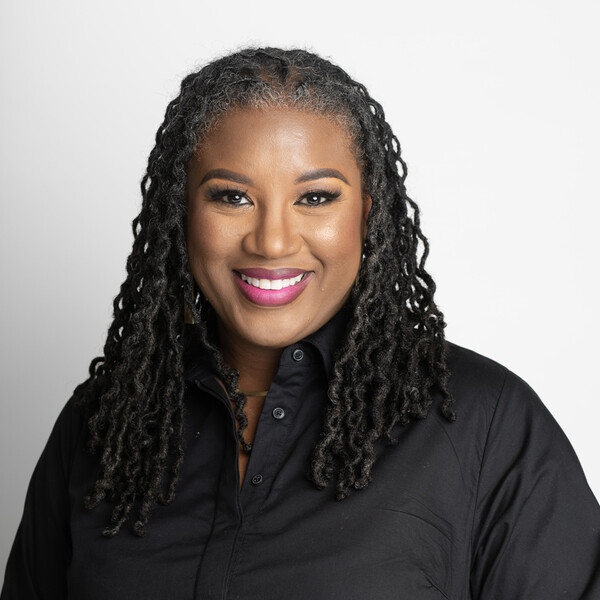
Mindy: That’s Kendra Jason, an associate professor at the University of North Carolina Charlotte who studies the impact of employment discrimination on older women’s health, as well as resilience, the ability to recover from adversity.
So, tell me about how these disparities affect women throughout their career, particularly as we get older, as we start hitting our 60’s and 70’s? What happens then?
Kendra: Well, different things happen for different women, right?
Mindy: We're not a monolith, right?
Kendra: Yeah. Many women, you know, they stay in the workforce for as long as they can because they have to. know, income is really important in America, right? And so, they work as long as they can. Some jobs are more physically demanding than other jobs. And we often think of women being in softer career patterns and softer jobs, but that's not always the case. Women who are especially in low paying jobs, service work, bus drivers, cashiers, daycare teachers, nurses, these folks are on their feet or dealing with physical elements of their job for 40 hours a week for years. And that takes a physical toll on their body.
A lot of black women who are in their 50s, 60s now have come from working class and working poor or poor families. So, they have most likely been physically working since they were 12, 15,16 years old. And it just takes a toll. So, a lot of times disability will pivot people's exit. For other folks, especially women, but I'll say especially Black women, the most successful executives and managers and supervisors, the most successful women, after a while, they may leave corporate America altogether just because the higher you go up in the organization, the less women that you see and definitely the less folks of color, especially Black people that you see and so dealing with that isolation, being one of few often puts a target on those folks back and just dealing with the mental toll of that is a lot.
Mindy: And so, as women start to think about retirement, how does all of this play into the decisions that they're making? I mean, this is a huge moment in their lives when if they're transitioning away from paid employment and thinking about how they're going to support themselves, how does that play into the decisions that they're making?
Kendra: Well, a lot of the decisions that women make about retirement are not based on open options. They're often nearly always based on income. And so, for a lot of people, retirement is not an option. People work until they die, or they work until disability where they cannot physically work anymore or cognitively or mentally work anymore, you know, but it's often not a choice that you know, at 65 or 67, I'm going to retire and then comes this golden era of my life. That's just not the case for a lot of women because cumulatively women have earned less than men.
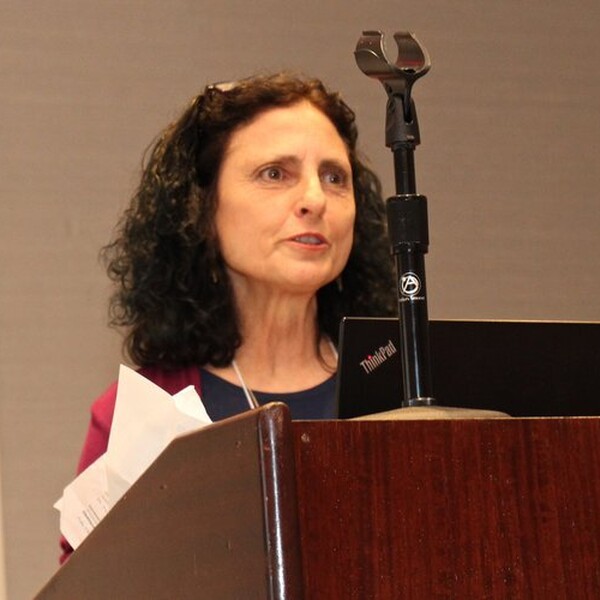
Mindy: To find out more about that, I tapped my colleague Our Bodies Ourselves, Dr. Toni Calasanti, a Professor of Sociology at Virginia Tech. Toni's done seminal research on ageism, especially how it intersects with gender discrimination.
Toni Calasanti: One of the things that we know is that women made progress in terms of employment rates, desegregating occupations and wages right up to the 20th century. And since then, it's really stalled. So, we haven't seen a whole lot of change recently. Women's present employment rates are 57% compared to 68% for men. But the gender pay gap has stalled and now it's about 82 cents to the dollar. So right now, for every 82 cents women earn men are earning a dollar.
Mindy: How does this all play out for women when they are retired in terms of their financial base?
Toni: Well, let me back up if that's okay. What I just told you about women is worse, if you will, when we start intersecting that with race. Women of color do much worse. For instance, Black and Latino women are substantially more likely than others to work in service occupations, which include jobs and health support, personal care, food preparation and serving, building and ground cleaning and maintenance. White women earn 76% of what white men earn in those occupations, but that's higher than women of color, 71% for black women, 70 % for Latinas. And I should say too that I'm intentionally comparing with white men, okay? Because within racial groups, you'll find that black women and black men are much closer to parity in terms of wages. So, the appropriate comparison group is always going to be white men.
And the same thing when if we look at high-end professional occupations, we find Black women only earn 64% of white men's earnings and Latinas receive 62%. And I have to say, these data are important because we tend to look at an individual level. So that you would say to someone, a young woman, you would say, well, get more education and you'll get paid more. And in fact, they will, but they don't see that in fact, the men who are doing that are diverging and getting paid a whole lot more than they are.
Mindy: So, let's go back to that question about retirement. So, as women start to think about retirement, how do those kinds of inequities play into the decisions that they're making?
Toni: We talked about the gender gap in wages. It's actually larger in retirement. And part of the reason that it's larger is because social security benefits are still based on earnings in years worked. So, women have lower social security benefits than men on average. Women of color and working-class women are lower still because again, their earnings are lower. But in addition, the other things that people take into account when they retire are pension benefits. And that includes the kind of 401ks that people talk about these days and assets and savings and women are lower on all of those.
Mindy: Toni says that even when a company has a 401k, women are less likely to be working in roles where their employer matches their contribution. And women contribute less than men - they don't have the extra money - and so by the end of their careers, women have significantly less saved than men.
Toni: So that's one problem. But another is, most of us don't have the financial savvy to know what to do with that money. So, you tend to put it away and not pay attention to it and hope it works out. People who have more money and have more savvy are playing with it. So, they can benefit. And you know, from the recession, whether you invested well or not, if the economy tanks, everybody's tanks. Yeah. So, these pension systems are actually not very secure. The one secure pension system, if you will, is social security. And for some groups, they rely on that very, very heavily.
Mindy: So, all of these proposed changes that are getting batted around, I find it a kind of very confusing landscape because Social Security is universally a popular program and so, you know, policymakers, legislators don't want to lose their constituents at the same time. There's so much pressure to so-called save the system. So, and I've heard you say that the system's not in crisis. Can you just talk about that a bit?
Toni: Yeah, it's sort of in crisis, but not really. And by that, I mean, one of the things that most of us don't know is that the Social Security Trust Fund is not a part of the federal budget. By law, they have to remain separate.
Mindy: So, if it's not part of the federal budget, how does Congress and the executive branch have control over it?
Toni: It's complicated. The Social Security Trust Fund is a lockbox. It's a separate thing. But there is what people call a unified budget. And that allows Congress and others to combine all these funds into the federal budget when they talk. So, they can, for example, give you data that shows how much Social Security is draining the budget.
Mindy: You're saying quote unquote, I'm looking at your air quotes.
Toni: Yeah. When in fact, it's not, it's a separate fund and they can't, the problem with social security is you can't borrow. So, if social security were to run out of money completely. They can't borrow from the federal budget. These are separate entities. Social security trust fund gets money, we pay into it every month, all the people working and retirees are pulling it out. It's called a pay as you go system. Knowing that in the future, with boomers retiring that there could be a problem. In 1983, Congress passed a law that first of all raised the retirement age for full benefits to 67. And that didn't start until 2000, and it was slowly raised. And it also raised our taxes a half percent. And they built a huge surplus, like $22 trillion right now, surplus. And up until 2022 or so, the money going in was still enough. The trust fund was not going down. Now it's starting to go down. As more boomers retire, that trillions of dollars is slowly going down. And the estimate now is by 2035, that extra money will be gone. But there will still be money going in by present workers.
Mindy: So isn't the problem that because of the demographics we're living through right now, fewer younger people, fewer people being born, blah, blah, blah. And so therefore there's less money going into the coffers than money being paid out.
Toni: Yes, that is. So, in 2035, if all holds, it's not that there'd be no money. It's just that the money coming in would only be enough to pay for about 83% of benefits. And we've known this for decades, right? But again, that half percent tax increase would have done it. Another half percent, that would have been it. And that won't continue forever because eventually the baby boomers will die out. And again, you know, the population will even out again in terms of that. But there is a time period where we would not be able to pay full benefits to everyone.
Mindy: You know, if you think about the kind of policy that we're living through right now, where people are being laid off by the thousands, I mean, there's some patterns going on here that from my calculation, and I feel like I'm just kind of learning as I go, it just seems like it's creating a worse situation.
Toni: Definitely. I think that some of that, speaking as a lay person, looking in, I think some of this is intentional. When we talk about things like the need to get rid of workers for efficiency, if you look at the Social Security Administration budget, for years now, only 1 % of their monies goes to administration, 1%. It's incredibly efficient. Incredibly efficient. But you lay off a bunch of workers that makes it not only inefficient, but that makes people unhappy. And then they will blame the social security administration. They will blame social security, say it's not viable. And then you get to do whatever you want to do.
So, one of the proposals, the big one, is privatization. And there have been many proposals about that in the past, but the most common was to have workers under age 55 divert a third of their payroll taxes. That's the amount you're paying into social security right now, into a private account. And of course, the logic is then you get to control that money, you can do what you want with it and so on.
Well, the immediate impact is then you remove a third of money going into the Social Security Trust Fund. So, it crashes much sooner. The administrative costs skyrocket because now you have all these multiple funds that people could use. But the same problem that we have in terms of defined contribution plans exists. Most of us are not good financial managers. And when this was first proposed, years ago by the Bush administration, the Congressional Budget Office ran figures to see who would benefit and who would be hurt. And the lowest income workers would be hurt the most, but median wage workers were going to lose as well. So, it would be vastly inefficient, vastly expensive, and with worse results for most of us who are not financial wizards.
Even with Social Security, half of Black women are within 200% of the federal poverty line. And the federal poverty line is not an accurate poverty line. So, I am concerned most about the future of Social Security right now.
Mindy: There’s a lot to be concerned about when it comes to Social Security. But there’s a part of retirement that may feel like it’s more in our control – and that’s the emotional shift that comes when you leave paid work behind. I talked to Linda Keene about that, too.
Mindy: You had mentioned to me that you had a bucket list, that there were things that you wanted to do when you retired. So, what did you initially do when you retired?
Linda: Well, one of the first things that my husband and I both wanted to do was to get healthier. So that was kind of priority one. Priority two was that we wanted to spend more time with people who we enjoyed. So, we kind of embarked on a tour essentially to visit a lot of different friends.
Mindy: So where did you go? Like what are some places you visited friends at?
Linda: We went to Dallas, we went to New Hampshire, we went to Florida. We have a lot of friends who've moved to Florida, so we've been hop, skipping, and jumping during different places in Florida. Savannah, we went on some jazz cruises, and we went to different jazz festivals, and we would take a lot of day trips to go visit places to learn more about this area that we were involved in. And then I also, don't know if I mentioned this, but I'm a passionate genealogist and I had a lot of questions that I wanted to answer. And so we joined an African American genealogy society and I really dove deep into my family history.
Mindy: Wow, yeah. So, do you feel like you've finished all the things that were on your bucket list?
Linda: Yeah, I did.
Mindy: So, at what point did you realize that your bucket list items weren't enough?
Linda: That was probably about two years in. We were very busy in those first few years of just doing all these things we wanted to do. And it was probably a couple of years in that I just felt a little restless. I'm in a sorority, I belong to a national African American women's organization, I had opportunities to volunteer and do things through that. But there was definitely something missing. And when I finally put a name to it, it was that hole that work used to fill. And I definitely didn't want to do work. I did not want to go consult. I didn't want to do anything like that. But I needed something that was more meaningful to me to kind of add shape and purpose to my day.
Mindy: So how did you land on art as the thing that you felt would bring some meaning to your life in retirement?
Linda: Well, I enjoy, you know, I thought about things that I enjoyed and one of them was art collecting. My husband and I have been collecting art for now about 40 years. When our son was young, we decided we wanted to fill up our home with images that look like him. So, we embarked on, you know, collecting African American art and I really enjoyed that. And I kind of remembered that when I was young, I really used to enjoy producing art. You know, just painting, drawing, you know, if there was somebody who needed your scenery for a school play, I was the one who was there with the paint, painting the brown paper wrappers that you would make into scenery backgrounds back then. And I did enjoy it. I felt like I had something that I might wanna say creatively.
My problem was I had no training in art, and I really didn't wanna spend any time going to school to learn how to do something. I figured if I was starting this at 65, I really wanted to get going with it. And so I wanted to make art, not to learn how to make art. And I said, what was it that I knew how to do that I thought I might be able to make art with? And that's where the sewing came in. I knew how to sew, and I said, I'm gonna make pictures out of fabric. That's what I'm gonna figure out how to do. So, you know, I read a few books. I took a few quilting classes to just, you know, kind of build up the formal skills because I didn't really have that. What I knew was more passed down. And I started experimenting.
Mindy: This year, Linda submitted her art to the Art Pop Street Gallery, a competitive city-wide exhibit that showcases local artists publicly throughout the city. She was selected as one of 20 out of several hundred applicants, and now her art is being featured on electronic billboards, and on the side of trucks!
Linda: I've had friends call me and said, I almost had a car wreck because I saw your art and I was trying to take a picture of it as I was moving.
Mindy: It's like, don't do that, don't do that. Please don't do that.
Linda Keene: But it's really been fun. The most exciting thing this year has been the fact that our art was featured in Times Square in New York. And I had a friend whose daughter came up out of the subway and literally saw my billboard. And she did take a picture of it. She said, it's absolutely amazing. So, it's been great.
Mindy: I'm wondering if this feels like retirement to you or is it another job?
Linda: No, it doesn't feel like a job. And that was one thing, I didn't want to turn it into a job. There's a woman whose work I admire a great deal and I've been following her, and she works with a gallery that I'm very familiar with and I, and actually very personal friends with the owners, but they drive her. She's got to produce so much and her work is, I mean, they've taken it all over and her work has gone up significantly in value, but I don't want somebody standing over me and saying, you know, I really need you to produce eight pieces or whatever. Sometimes I might do four or five in a row and it's just a burst of energy and then there's a time when I don't feel like doing it and I don't want that kind of pressure.
Mindy: So, do you have any advice for other women who are about our age?
Linda: To me, it's important to do the things that you want to do at this stage of life. In an earlier stage, I felt like you're always proving yourself, know, am I able to do this? Can I do that? Whatever. And I feel like at this stage, you should be doing the things that you want to do. I mean, I always tell people, no is a complete sentence. You know, and one of the things that I find that I look at a lot of contemporaries and I do a lot of talking to women who are about to retire.
And one of the things that I've found is that there are a lot of people who just, when you have free time, feel perfectly comfortable wanting to use up all your free time. know, many of my friends I find have been sucked into being full-time caregivers for grandchildren. You know, and to me, I never had that expectation of my mother and my son didn't have that expectation of me. I mean, I love my grandchildren dearly, but I didn't want to do that. But I find many people find themselves kind of as women pulled into certain kinds of roles. And so, you really have to figure out what your personal boundaries are. And I would say apply them as necessary. Because you will have situations, caregiving and other things that are not entirely in your control, but you have to be protective because otherwise you just kind of lose yourself.
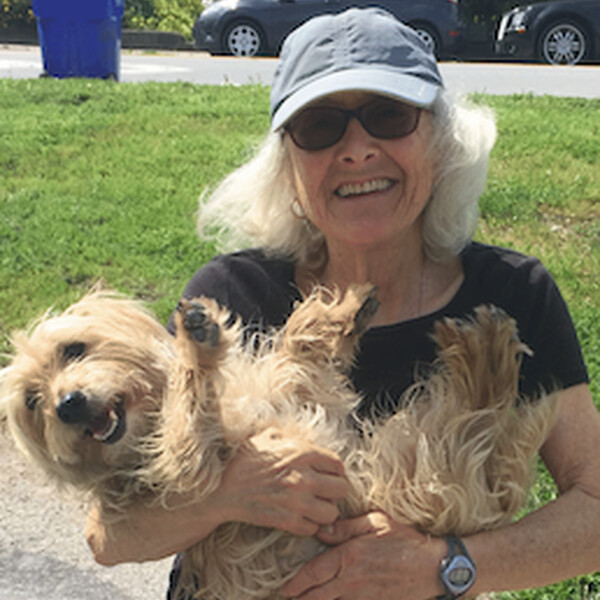
Mindy: I wanted to learn more about how women are making the shift from paid work to retirement, so I called Dr. Jill Steinberg, emeritus psychology professor at San Jose State University. Jill is a licensed clinical psychologist whose research on retirement draws upon interviews she conducted with over a hundred people about their retirement experience. She calls the process a shift from retiring to rewiring.
Mindy: So, Jill, when you retired from your academic job, you weren't sure what your next move would be. And you were asking yourself some really tough questions. What was on your mind at the time? What did you decide to do?
Jill Steinberg: Well, I'll tell you, and actually I ask tougher questions as it goes along, and I get more informed. But what happened for me was I decided to retire earlier than I expected, just like the research says people do. And when I retired, I got a dog right away. I spent my life waiting for this moment to have a dog. And it's not a joke in the literature, especially the COVID literature supports animals are good dogs are even better than cats. So that was a great thing for me. And what I did actually was I did what I normally learn to do in my summer transitions at the university was start taking classes. Because I live in Santa Cruz, I could take things at the junior college, like the music courses. I took political science history at UCSC. But after about two years for me, I realized I'm enjoying this. I'm doing my music and psychology; I'm going to conferences. However, it wasn't my thing. It was a good hobby, and I continue with it, but I woke up to the reality of something's missing, just as the research happens to people in general.
And what I did is, again, what I normally do, I thought, okay, I've got to read about this. So, I spent the next year reading about retirement. How do people really deal with this? So, I looked at the research and then I was a member of our OSHER Lifelong Learners here. It's like about 900 people that are my age, retired or thinking about it. And I said, you know what, I wanna learn more. I wanna interview people. So I went there and within 20 minutes, they gave me to announce my program, get people to sign up, 120 people signed up. So that's how it started. And from there, it just blossomed.
Mindy: One thing that I've observed is people who have full time jobs where they're working super long hours over time. You know, it's hard for them to find the time to think about what I'm going to do next. Other people who have a little bit more flexibility, maybe they can start thinking about what projects or whatever they're doing that can be transferred over. But I don't know, what did you learn when you did your research?
Jill: If you can choose your retirement over being forced out, that's actually the best predictor of success. Not that we exactly know what success is, but if you can plan ahead and think and have control that way, that helps. The other thing I want to tell you that I found in my research that wasn't there and is there now. It's important to implement things before the transition, before you quit. Start early implementing things like I implemented classes. And from my years of doing this, now I’m focusing on also finding purpose in retirement. People, if they even plan for retirement, that's a big if, they plan for finances. And at best, 75% of people enjoy their retirement, 25% have a very difficult time with the transition, 10% never enjoy it at all.
Mindy: So, you talked about the importance of having a sense of purpose. Could you just talk more about what that means?
Jill: Yes, it's applying your best self to things that matter most to you that are bigger than yourself. And that bigger than yourself, people often don't think about. They think, I'm going to learn watercolor, which is nice. And that could be good because people like to be challenged, including at our age. But they don't think about the bigger part of giving back. And the literature says that is really a significant part. And I want to tell people that are older, grit or persistence is important throughout life. It even predicts doing well in university better than your IQ. People over 65 have the most grit. So maybe you work with foster kids or university people. Giving back helps you keep going when things look bad or you can't make it work. When you know you're giving to something bigger, that helps.
Mindy: You know, if I think about the people that I know who have retired, a lot of them are spending time as grandparents with their grandchildren. Does that fit into your definition of having a sense of purpose?
Jill: Yes and no. So being a grandparent, if it's by choice, meaning you want to be giving your time, that's one thing. There's even some literature that says women like being grandparents more when they were employed than when they were retired because their life kind of becomes free range to everyone. So, when you're thinking of retiring, you're thinking, how do I want my life to be? Well, other people are thinking about it too and not necessarily expressing, oh, you're going to be retired, now you can do this for my children. So, it's a mixed thing and women don't tend to enjoy retirement as much as men because first of all, we have usually typically not earned as much. So, we're not as well off financially and we're taking on more domestic chores, whether it's for our grandchildren, our children, or our partner for heterosexual relationships.
If your partner retires and you're retired, chances are you are now spending an hour more a day taking care of others. So yes, it can give you purpose depending. It can be too much, and women aren't good at saying no or figuring out what we want. And men will say at the end that's the Harvard study, the longest study going on, it started in 1938 of adults’ development. Men will say, I work too hard. Women will say, I wish I cared less about how others thought about me. So it's mixed, your question.
Mindy: Yeah, so tell me what advice do you have for women then?
Jill: Wow.
Mindy: For are older women who are retiring, given what you know a lot about the literature and obviously, you know, this is aggregate data and there obviously there are many women, I would say, including myself, who are happy, I mean, I don't even call myself quite retired because I'm still working for pay, but also I'm a grandma and, you know, juggling all of that. But I think a lot about these issues, and I observe other people around me and and I think people would benefit from the wisdom of your perspective.
Jill: Well, I'm going to say something hard. Is there any way you could start learning to think about yourself and be introspective about what would I like or think about at your death, you know? What do you wish you would have accomplished? Now that you know that women say, I didn't lead the life I wanted. I cared too much about what others thought about me and couldn't do what I wanted. Maybe you could think about it. And there's something that's heavy for me that I would say, plan to be going on your own, going solo.
So, since the eighties, Klinenberg has been doing research about going solo, living on your own. Women live a lot longer than men. One out of three baby boomers live alone. So I encourage when I give my presentations that people take this to heart. Think about it. You know, there might be skills you don't have, including where are you going to live, whom are you going to live with? I have the literature on gay partners and that's more about rejection from family. So, thinking about if you're going to assisted living, you know, who's going to be open to the queer culture. So, there are lots to consider, but I'll tell you about Leslie.
Leslie had a very high position in mental health in my state in California. And in terms of her retirement, she did all the things that now I would say to do. She's very planned a lot, including took a lesser high position, planned exactly what she was going to do with her husband, blah, blah, blah. And of course, everything goes awry because just as she's about to retire, husband dies, and her dog dies.
And Leslie hadn't developed close friendships. She shifted from long-term planning to what she calls elements in her life. She reordered her thinking to what's important to me today.
So for her, she has like five elements, social connection, being physical. She's a meditator. She meditates. She volunteers in the same kind of work, but differently than before and creativity. So she has five different elements that gear her days. And she has adjusted, she's learned to have connection with other people, not just children that live far away. She's a very likable person. She had a lot going. It just wasn't a commitment. So Leslie is a sad, good, but successful example, is why I tell you, of dealing with going solo.
[Music to Credits]
Mindy: Do you have a story to share about growing older? We’d love to hear from you. Our phone number is: 1-8-6-0-8-0-0-2-1-3-0. That’s 1-8-6-0-8-0-0-2-1-3-0 or e-mail us: at [email protected]. That’s [email protected].
Next Chapters is co-produced by me and Karen Given, who was also senior editor and engineer. Thanks to our project advisors from Our Bodies Ourselves, Christina Barmon, Toni Calasanti, Joan Ditzion, Kim Hunt, Laura Prieto, Wendy Simonds, Taura Taylor, Dr. Imani Woody and Erreannau Zellous. Thanks to Jonese Austin, Eva Parker Passalacqua, and Kiki Zeldes for their work on creating the podcast website. Music is from Blue Dot Sessions.
For more information about the show, go to ourbodiesourselves-dot-org-slash-next chapters. While you're there, please consider donating to keep the show going. You'll find the link at our website. The address again is ourbodiesourselves/nextchapters.
I’m your host, Mindy Fried. See you next week!
Show More