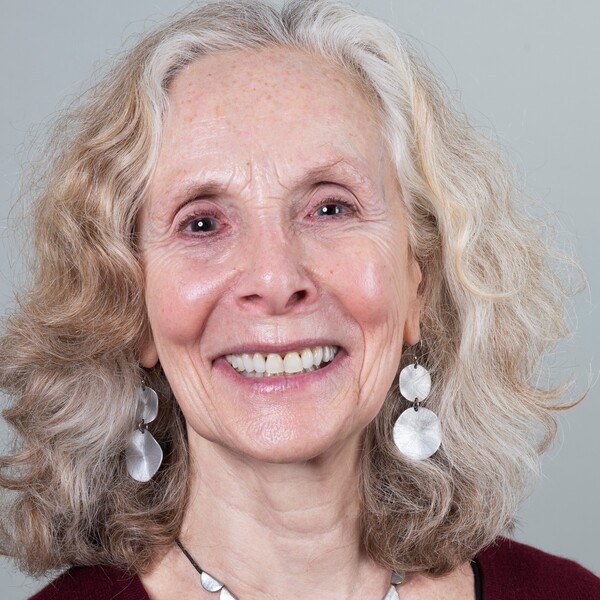
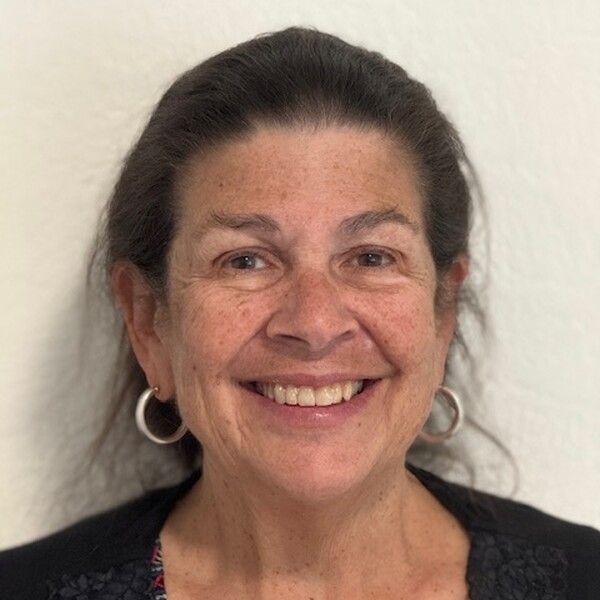
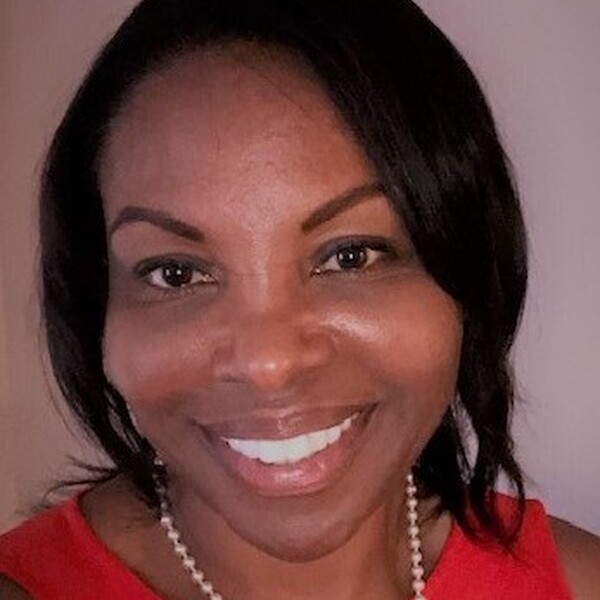
Mindy Fried: Jokingly, what I say about my family is that we live very long, but we die blind and our backs hurt. So that's our shtick.
I have eye problems. That's something that just runs in the family. I had been seeing this doctor for a while. I had had a number of non-invasive procedures. One eye is particularly worse than the other. And at one point my doctor said that I needed surgery.
A week after the surgery, I went in for a post-op appointment and I was experiencing a lot of blurriness in my eye and I was disturbed, but I kind of figured, okay, maybe this is kind of the norm; and at that meeting there was a resident along with my doctor. And at one point my doctor left his office and the resident said to me that there had been profuse bleeding during the surgery and that there was a scratch in my eye that might be contributing to the blurriness. When the doctor came back into the office, I said, oh, so you know I understand that I got a scratch in my eye during the surgery. And he said, “oh, that was because of instrumentation.” And so my mind goes to, something’s poking me in the eye and creating a scratch. I mean, it's kind of a horrible image. But I didn't say anything then. I came back the next week, my eye was still very blurry. It was a bit worse. And so I asked about the scratch and the bleeding and the instrumentation, and he said, “oh, I never said that.”
Honestly, the word “instrumentation” is not in my vocabulary when I'm thinking about my eyes. So I feel like he out and out lied and was covering something, and that created some major distrust in this process. I mean, I was trying to stay cool, but I was worried that they had done something during the surgery and that my eye was actually getting worse. And the resident was there as well. And the two of them are taking turns looking at my eye and chatting back and forth in low tones, like I'm not there. It sounded to me like they were concerned and given everything that had just transpired prior to that, um, I just said, “what's going on?” And my doctor, instead of responding to my worry, my doctor said, “don't interrupt, because two professionals are having a consultation”.
It felt very disrespectful, felt rude, and I kind of froze. You know, I didn't have words, but I had feelings… Anger. Worry. Rage. And just, I think just kind of a little bit of terror, a little bit of, uh, fear. Fear like uh oh, what's going on here? You know?
I just got up and walked out. I didn't say goodbye. I didn't say, thanks, good to see you. I didn't feel any of that. I just got up and walked out. I needed to process what had happened before I could respond. I needed to think through all the steps. At some point I'd have to, I'd have to do something. You know, was it, confront him? Put in a formal complaint? Leave the practice? I didn't know what I was gonna do.
I realized that my doctor probably wouldn’t have spoken that way to a man or to a younger person. Was that ageism? Was it sexism? Was it both? All I know is that I felt disrespected on top of worrying about losing my eyesight.
“Ageism is probably the most under-recognized unconscious bias”, that’s according to geriatric specialist, Dr. Sonja Rosen. Twenty percent of people over 50 face age-based discrimination in healthcare. Dr. Louise Aronson, a professor of medicine at the University of California, San Francisco says that assumptions that older people are one big, frail, homogenous group can cause more serious issues. Like when a patient doesn't receive the care they need because the doctor is seeing a number, rather than an individual. Or just the opposite. When doctors prescribe too many meds or too many procedures”. Aronson says older patients can suffer unnecessarily.
In this episode, we look at how ageism and other isms affect older women from diverse backgrounds in accessing quality health care.
Welcome to Next Chapters, a new podcast that explores the remarkable landscape of growing older for women – from relationships and sexuality, to health care, housing, and retirement. Next Chapters is proudly sponsored by Our Bodies Ourselves, a globally renowned resource for the health and sexuality of women and gender-expansive people. I'm your host, Mindy Fried.
<music ends>
I told my story to Judith Graham, an independent journalist who has written extensively about aging. Judy’s columns have been published in media outlets throughout the US, including the New York Times, CNN, and the Washington Post. And I asked her to start by telling me how she would define ageism in health care.
Judith Graham: Let me give some examples of what ageism in healthcare can look like.
Mindy: Great.
Judy: One example comes from the pandemic when various states came up with crisis plans for care. They were essentially plans for medical rationing. And basically they said, if treatments are in short supply, they go to younger people first, older people last. That's saying pretty explicitly, we devalue older people, and value younger people more. That's an example of explicit ageism. Implicit ageism - you walk into a room, maybe you're a little slow, maybe you talk slowly, and doctors jump to the conclusion that you're cognitively compromised. And they don't offer you the same treatments that another patient might be offered. They don't talk to you in the same way that they might talk to another patient. They don't involve you in medical decision-making.
This speaks to the issue of internalized ageism that many of us, in fact most of us think of growing old as something to be avoided, as something bad. And that includes doctors and nurses and other healthcare professionals. And what are the consequences of that? Nearly 20% of people 50 and older say they've experienced discrimination in healthcare settings. Up to 93% of older adults say they regularly experience at least one type of ageism. And that includes messages that suggest older people are unattractive or desirable.
The best data I found was from the United Kingdom, from the Center for Aging Better. So in a November 2024 report, based on a survey of over 2,000 people, women were 50% more likely than older men to say they'd been patronized or dismissed, but they were half as likely to challenge someone who treats them negatively because of their age. Only 12% of women were willing to speak up. Isn't that interesting?
Mindy: So I'll take that in, that only 12 % of women would have done what I ended up doing.
Judy: Because, first of all, you're afraid that your doctor is going to take offense and you won't get the necessary care.
Mindy: Exactly.
Judy: That it will interfere with a relationship perhaps that you've built over many years. Many people retreat when they're exposed to discrimination. Walls go up because it's painful. So to speak out requires having confidence that you're gonna be okay. That you're gonna be able to find a new doctor, that you're gonna be able to preserve a relationship, or you're gonna be able to navigate in some other way what is an impossibly complex system, especially for older adults.
Mindy: Well, I have to say that, you know, my ability to do that, I mean, I walked away feeling angry, but not knowing what to do. And it was in talking to friends and in particular, one friend who's a healthcare professional who had the same kind of outrage in her response that I had. And I can't even remember whether it was she or I who figured out that I needed to find out if there was an advocate within the system. And they didn't make it easy to find that person, I have to say. And the response from the person that I initially talked to was in, I think they called it the compliance department. Anyway, that person said, “oh that surprises me because he's such a nice guy”. If I think about it, that wasn't a very professional response. A professional response would be, I'm really sorry that that happened to you. And to actually listen and believe me as opposed to saying, gosh, he's such a nice guy, how could you, why would you say that?
Judy: So there's a group called, Changing the Narrative, which is devoted to changing the narrative of aging in the United States. They modeled some interactions of what a provider might say and how you might respond. So let me, let me read some of these to you. I think you'll enjoy this.
So a common issue is you come to an appointment with one of your adult children. The doctor walks in the room. He talks to the daughter or the son instead of you. He talks over you. What do you do? You can say, “you can speak to me directly instead. My friend, relative, spouse, child is here to support, and I'll let them know if I want their input.”
Mindy: I love that. Yeah.
Judy: In other words, you take control. You're feeling kind of down. It's actually gotten to the point where you really feel like you need some help. And the provider says, “this is a very common assumption made about older people, it's normal to be depressed at your age”, dismissing your concern. What can you say? You can say, “I know many people my age and they aren't experiencing this. Can you please help me find an answer?”
Mindy: It sounds so non-confrontive also, the way you just said it. That’s interesting.
Judy: Right, right. Here's another example. You're in a lot of pain. This is a big issue. Older adults with pain that's ignored, not treated adequately. You come to see the doctor and the doctor says again, the pain is to be expected. You can say, “I understand that certain conditions can develop with age, but I'd like to continue doing what matters to me. What are my options? Help me problem solve.”
Mindy: So I'm listening to these very reasonable responses and they sound great. I know in my experience, my first response was just rage. How do we deal with our rage?
Judy: I think the way that you dealt with it, which is talk to other people about it, the worst thing to do is to hold it inside and let it eat away at you. You might not be able in the moment to come up with a response like that, but at your next visit, you can say, “doctor, I was thinking about our interaction at that last visit. And you said this and I want to let you know how it made me feel. It made me feel dismissed. It made me feel like you really didn't want to hear what I had to say. It made me feel really bad”, right?
Mindy: Yeah, I mean that that is kind of what I said.
Judy: And how did he respond?
Mindy: He said he was sorry, he apologized and it felt authentic. And then he said, “when you ask me a lot of questions, I get flustered and I can't think of the answer right away”, which felt like it was being put back on me. It's like, wait, you're the doctor, you're the person in charge here who's supposed to have answers. If you don't have an answer, then just say, “I'm not sure yet, I need to think about that”. But don't tell me that I asked too many questions because that felt like a continuation of this blame framework. It didn't feel great.
Judy: And I think it's interesting because a lot of older adults, especially as they get into the quote, “old old” phase, which is after 85, they're, they're complicated.
Mindy: It’s worth mentioning that there's controversy among aging experts about pinpointing a specific age at which a person is considered "old" or "old old". There’s a lot of variation when it comes to individuals. At the same time, doctors often look at age and assume that it correlates with someone’s health status.
Judy: You might have vision issues. You might have hearing issues. You might have arthritis. You might have some kind of heart condition. And I think all too often providers treat them like they're a pain, because they're so complicated. It takes time to understand what's going on and they don't have the time. And there are no easy fixes. A lot of doctors prefer not to deal with patients of that kind. They don't have the time. They're not reimbursed. They're not paid adequately for dealing with them. And that's a whole other kettle of fish.
Mindy: I mean, part of what I hear you saying is that it's a systemic problem as well as a personal problem. And maybe you're even raising the question about the kind of training that doctors get, you know, for them to be able to see the whole person and to have the time to actually invest in understanding the whole person, which, you know, is really about the systemic pressures to, you know, move fast, make more money, see more patients, et cetera. So it's a complicated issue, isn't it?
Judy: Absolutely. And to speak to the systemic issues that you just raised, many medical schools do not offer training in geriatrics, or they offer two weeks in a curriculum of four years, essentially. So geriatric expertise is very limited. And beyond that, medical research has focused on middle-aged people, mostly middle-aged men. And results have been extrapolated to older adults as if they were just older middle-aged adults, but they're not. Our bodies change with age. So the entire research enterprise and the entire clinical enterprise of medicine in the United States has been poorly equipped to care for our burgeoning elder population.
Mindy: Can you just talk a bit about how ageism impacts older women in particular?
Judy: I spoke to a friend yesterday, I've spoken to several friends, and none of us have ever been asked, and we're childbearing women by the way, about whether we have urinary incontinence, which becomes more common with age. What happens in the most extreme cases? Older women isolate themselves at home because they're afraid a bathroom won't be available with all the consequences that that brings. Heart disease looks different in women than men. In older women, there's more microvasculature compromise, meaning the small blood vessels are more compromised than the large arteries and blood vessels. But this hasn't been studied. How do you treat it? What does it look like? Do you test for it? Right. So that's an example.
Mindy: Yeah. And, you know, in our current political climate, that kind of research, I would question whether it would be funded.
<theme music starts in background>
Judy: Some research will continue under the Women's Health Initiative, but as we all know, much of the research that is needed to establish a much stronger foundation of how to care best for older women will not go forward because researchers all over the country are having grants canceled.
<Theme music swells>
Mindy: I also shared the story of my visit to the eye doctor with Dr. Karen Bullock, an endowed professor of social work at Boston College. Karen has more than 25 years of clinical practical experience in mental health and aging with an expertise in health disparities. And Karen had a different take on what happened to me.
<Theme music dulls off>
Dr. Karen Bullock: I mean, first, I think it's important for us to remind ourselves that we're all human beings. We bring into our professional settings our acculturation, our socialization. So to the point that you made, if an individual has sort of stereotypical images of a person due to a host of different attributes, it could be gender, could be race, it could be ethnicity, it could be religion, a host of factors, a person could treat a woman differently because they feel that women are less assertive or women are too emotional or what, you know, all those stereotypes. And those are the kinds of things that we want to be aware of and to address broadly.
Mindy: So how do you address those things broadly?
Karen: Well, I don't think that it's a one size fits all or there's one way to do it. I think for most people, it depends on what they feel that they have within their capacity at the time. I mean, it would be best if these things didn't happen, but as you've already alluded to, they do. And some people feel that they will address it or bring it to the attention of the person. But many people, especially in healthcare settings, they don't feel that that's the time to address something that is happening negatively between the provider and the recipient of care because the patient or the family member is sort of in a disempowered position, if you will. Like that is a very difficult predicament to be in and to address. And also a patient or family member shouldn't have to because the clinician or the provider or the physician or whatever role, the nurse practitioner, the social worker, whomever is in the professional role is the person who should be attuned to this and should try as best they can to minimize it or to eliminate these kinds of behaviors because it leads to inequitable care. It means that that person isn't receiving the care that they deserve. So I think the burden of responsibility is on the clinician or the provider.
Mindy: Like Judy Graham, Karen notes that patients are in a disempowered position, and few people are willing to confront their physicians when they’ve experienced discrimination. The blow back could be too damaging. She believes we need to address this problem at an earlier stage. As a professor responsible for teaching the next generation of health care providers, Karen wants to train providers to avoid making their patients feel the way I did. Karen’s perspective is also different in another way. She’s spent much of her research focused on examining the health care experiences of older adults, with an emphasis on race. And she’s found that for Black and Latino older adults, these issues are a lot more complex.
Karen: The way that I first became interested in this field had to do with my experience as a caregiver for my mother. My mother was diagnosed with metastatic lung cancer stage four, and she lived four months from diagnosis to death. And while I was on that journey with her as a caregiver, I realized just how much health equity matters. And I realized that there are many cultural groups here in the US that do not have equitable access nor equal access to healthcare.
Mindy: So you learned a lot about issues of health equity. Do you mind just describing a little of what you’ve discovered?
Kare: Sure. Well, I assume that probably most people are aware that in US healthcare systems, historically, there was structural racism. And so Black people and white people didn't receive care in the same care settings. And it wasn't until 1969 that President Lyndon B. Johnson struck down these barriers, at least legally or with legislation. Until that time, many Black people, especially those in the rural South where I grew up and where my family lived, there were not hospitals and healthcare settings available in our community. Many of the hospitals didn't comply until well into the seventies in terms of the desegregation of hospitals. There is still a lot left over from those days of the structural and systemic racism in healthcare systems. And so there are many people in my community who do not have positive relationships with healthcare settings and systems.
In my family, we didn't receive care in hospitals. My grandmother had a remedy for everything if we got sick. And I guess we were fortunate to be healthy because we didn't go to hospitals. We never had a primary care physician, so we didn't have relationships with health care providers in the way that many people do in contemporary times. And so if they're diagnosed with a serious illness, they already have a relationship with the healthcare provider, which is what is recommended. But there are many people in our society who do not have a primary care provider. So when you're starting at ground zero with your engagement, it can raise all kinds of issues and concerns for the individual who needs the care. And one being a lack of trust. That was one of the most difficult and most challenging experiences was trying to figure out, how do you develop a relationship with a system that you don't have a relationship with and you're doing so at a time when your health is most compromised.
Mindy: How old were you at the time?
Karen: I was a doctoral student, so I was an adult. I was not a child. I was a full-fledged adult and a fairly educated person, but had not, as I said, I hadn't given much thought to hospice. And we weren't even talking about palliative care in our society at that time.
Mindy: Palliative care is specialized medical care that focuses on providing relief from pain and other symptoms of a serious illness. It can help with coping with side effects of a medical treatment. A person can receive palliative care at any time and at any stage of illness, whether or not it’s terminal.
Karen: And so it was just new language to learn and also just engaging with care providers around ways in which they believe to be the standard of care for individuals and families.
Mindy: You started out as a clinical social worker.
Karen: Yes.
Mindy: And you were working with older people at that time, right?
Karen: Correct.
Mindy: And what did you learn about issues related to health equity through this experience on the ground?
Karen: Since the beginning of my career, I was always aware of inequities. Inequities and disparities have existed long before I started doing this work and certainly over my entire career.
And for Black patients, there are older adults who are still alive today who remember when they could not receive care in hospital settings where white people were cared for. That is worth saying out loud and acknowledging. Because for those people who have lived through that structural racism, they have a different type of relationship with US healthcare settings and systems than those who have never been legally denied access to healthcare. And that's very real. And so when we think about how people engage in systems and we think about things like mistrust, they're coming from a real place of having experienced it firsthand.
Mindy: Karen is a prolific researcher. She has spent the past two decades publishing dozens of studies about how older Black patients experience health care, including end-of-life care. And she’s made some fascinating discoveries along the way.
Karen: I was really interested in understanding the dying experience of patients in hospitals, because if you look at the literature, it suggests that the vast majority of people in the US die in hospital settings. So I did this study that looked at medical record data. And what I discovered was that there were very few Black patients who had died in this hospital, even though the hospital was physically located in a community that was primarily Hispanic, Latino, and Black patients. So I was surprised at that finding. So I wanted to understand why that was. So I conducted a small qualitative study in which I enrolled participants in focus groups. I started with Black patients and they were community dwelling but of course they were older adults who all identified that they had a chronic illness, was living with chronic illness.
Mindy: Can I ask a quick question? What do you mean by community dwelling?
Karen: They weren't hospitalized. So they were not in the hospital, they were not in nursing homes, so they lived within the community, as opposed to talking to patients who were in a hospital or in a care setting.
Mindy: Got it.
Karen: And these individuals were able to tell me why they don't receive care in that hospital and why they would prefer not to receive hospice care if it was offered to them.
Mindy: And what did they say?
Karen: Well, what they said was that they remember when they couldn't receive care at that hospital and they explained that there's a hospital that they consider the Black people's hospital. So that's not a welcoming option for them. And so they choose not to go there to get their care. And they believe that they wouldn't be cared for very well in that setting. You know, they said that they felt that they would be less understood at that hospital, they didn't want to be a “guinea pig”, was a term that often came up in the research. All of those participants were aware of the Tuskegee experiment.
Mindy: The Tuskegee experiment was a 40-year government-funded study of 400 African-American men who had syphilis. 15 years after the start of the study, penicillin became the standard treatment. But the men in the study were not treated. The disease killed at least 100 men and many of their wives and children contracted the disease as well. In 1974, a class-action lawsuit resulted in a $10M settlement.
Karen: Many people think that older African Americans, especially those who don't have very much formal education, that they're not literate and they don't know these kinds of things. And it was really eye opening for me because all of those participants were aware of the Tuskegee experiment. And they talked about that. They were aware of who Henrietta Lacks is, and they brought this up.
Mindy: Can you say who she is? Because a lot of people will be listening and not know who she is.
Karen: You want the abridged version of Henrietta Lacks?
Mindy: Yes, please.
Karen: Henrietta Lacks was a patient at Johns Hopkins. And I don't know, I hesitate to name, but everybody knows that Johns Hopkins had a horrible relationship with the Black community. But in 1951, researchers at Johns Hopkins Hospital took a sample of cells from a woman named Henrietta Lacks. And she was diagnosed with and living with cervical cancer. And they did so without her knowledge or her consent. And so the cells that they took from Ms. Henrietta Lacks were known as the HeLa. So a part of her name, H-E-L-A, cells. They were unique because they could reproduce indefinitely in a lab. And there was a breakthrough and there was revolutionized medical research using her cells. But there were significant ethical issues with it because again, Ms. Henrietta Lacks, nor anyone in her family ever consented to have her cells taken or used.
And this is very real for people. I mean, if you talk to people in the Baltimore area, they know Henrietta Lacks' family and 1951 was not a very long time ago. And so these narratives continue, people share these as reminders of how Black people have been treated. And so in the Black community, there is knowledge that oftentimes isn't accessed by healthcare providers, but that doesn't mean that individuals and families are not sharing these stories as reminders of how they could be treated in contemporary times in hospital settings and healthcare settings.
Mindy: So can you talk about the link between health inequities and longevity?
Karen: What's in the literature, research studies show that people who don't have access to care are more likely to live with illnesses that go untreated and they're also more likely to have higher death rates when they do contract or are diagnosed with a serious illness. You know, one of the things, one of many things, that we learned during the COVID-19 pandemic is that structural racism is real. Since the COVID-19 pandemic, there's been increasingly more literature around best practices as they relate to cultural awareness, cultural responsiveness, cultural competence. The idea of cultural competence isn't that any person would know everything about anyone's culture. That is not possible and it's certainly not a goal that anyone has. But healthcare is a competency-based field of practice, meaning those who work in healthcare have to demonstrate that they have a level of competence to perform their jobs or to perform their role. But yet when we talk about cultural competence, people are very dismissive and say, I can't possibly know everything about someone's culture. But the goal isn't for you to know everything about someone's culture. The goal is for you to know something about culture and how cultural factors influence healthcare outcomes.
So I hear a lot of clinicians say, I treat all my patients the same. I'm not really sure what that means. But it's important to know that not all patients need the same things and not all patients want the same thing.
And when we're talking about seriously ill patients, and even to go back to my experience as a caregiver with my mother and sort of how we started this conversation, all of the people who were on the care team with my mom until she started receiving hospice were white providers. I don't think, and I feel certain that none of those providers intentionally created a barrier. I don't think they would have wanted to create a barrier, but they did create barriers. And I'll give you an example, we were asked about an advance directive. For people who may be listening who do not know, participating in advance care planning is talking about what you would want to have happen in the case of a medical emergency. And if you could not speak for yourself, who you would want to speak on your behalf. And for many people, the goal is to have you put that in writing so that if and when you couldn't speak for yourself, they could refer to your advance directive, the document that you would have signed, so they'll know with whom to speak and who would make those decisions on your behalf. And so that's my paraphrasing of it. And so when my mother learned or we heard what that was, my mother's response was, why would I need that when I have a daughter? My daughter will take care of all of that.
Mindy: That's the perfect response, isn’t it?
Karen: That's how we started on this journey. That's, you know, hearing that, you know, was the realization for me that this was going to be a cultural journey and one that would not be easy. Even to go back to your example about being a woman and how you were treated in a healthcare setting. For those of us who are women, we women often talk about, you know, how people respond to us as women as the minority in the dominant group of men. And so we can look cross-culturally, whether it's age, gender, gender orientation, socioeconomic status, culture isn't just race. Culture is much more than race. And if we could sort of align ourselves to think about cultural differences, I think we could make more progress in this area of cultural competence and talk about cultural differences in a broad way rather than in a narrowly focused racialized way only. Racialized ways are important, but it isn't just about race.
Mindy: So I'm listening to you and I'm so agreeing with everything you're saying and also thinking that in this particular political moment in time, some of those concepts which are so essential are also under threat. Is that something that you're concerned about?
Karen: Absolutely, I'm concerned about it. I would hope that all people would be concerned about it because I'm simply talking about everyone having access to care, but then also having access to care that takes into consideration your preferences and your needs. I mean, we're seeing it played out all around us. That this idea that we would pay attention to history is sort of obsolete and that we only need to be in the present and looking forward. But if we don't pay attention to history and what has happened to people historically, then we won't funderstand the need for equitable access and equitable care. We need to do things differently to ensure that people do have access to equitable healthcare.
Do you have a story to share about growing older? We’d love to hear from you. Our phone number is: 1-8-6-0-8-0-0-2-1-3-0. That’s 1-8-6-0-8-0-0-2-1-3-0 or e-mail us: at [email protected]. That’s [email protected].
Next Chapters is co-produced by me and Karen Given, who was also senior editor and engineer. Thanks to our project advisors from Our Bodies Ourselves, including Christina Barmon, Toni Calasanti, Joan Ditzion, Kim Hunt, Laura Prieto, Wendy Simonds, Taura Taylor, Dr. Imani Woody and Erreannau Zellous. Thanks to Jonese Austin, Eva Parker Passalacqua, and Kiki Zeldes for their work on creating the podcast website. Music is from Blue Dot Sessions.
For more information about the show, go to ourbodiesourselves-dot-org-slash-nextchapters. While you're there, please consider donating to keep the show going. You'll find the link at our website. The address again is ourbodiesourselves/nextchapters. I’m your host, Mindy Fried. See you next week!
Do you have a story to tell about growing older, or questions for us? You can reach us at 1-860-800-2130 or by email at [email protected].
For more information about the show, go to ourbodiesourselves.org/nextchapters
Show More