Relationships & Sex: Don't Be Afraid of Hard Conversations
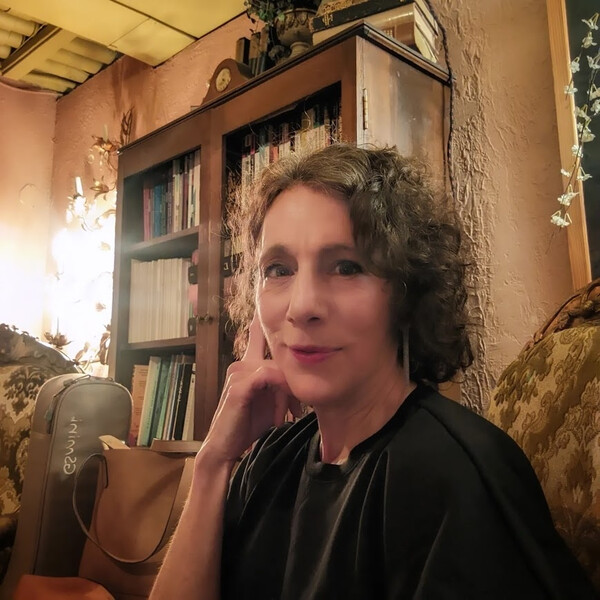
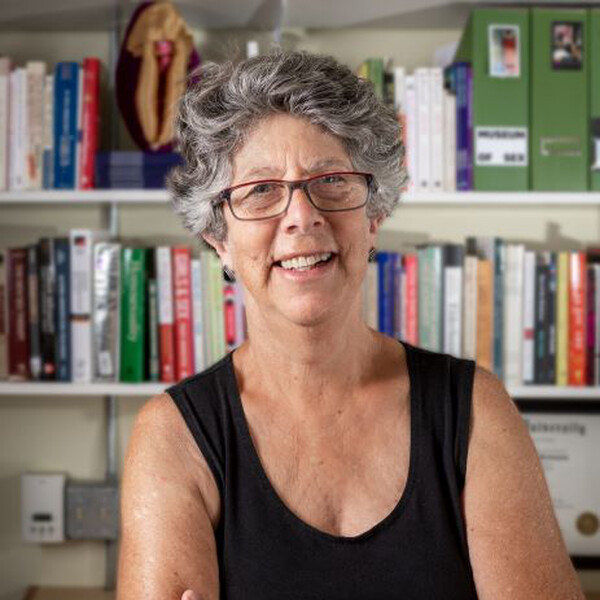
In this episode, we hear from musician and organizer, Sheryl Wiser, who found love again in her 60s with a “young 71-year-old man.” And we talk to Dr. Jane Fleishman, a certified sexuality educator who is on a mission to promote the sexual wellness of older adults, from teaching workshops in senior centers to training sex therapists. She makes sure that therapists see older adults as sexual beings, though the idea is new to many of them.
Guests
in order of appearance
Episode Transcript
[Theme Music starts]
Mindy Fried: When we put out a call for podcast guests over a year ago, we got a note from Sheryl Wiser, a musician from Seattle who’s been creating and performing music for nearly 50 years, since she was 18.
She wrote, “I’ll be 67 in a few weeks and performing regularly and will be recording later this year. There are so many "messages" out there for women to disappear, especially women artists. It's fun to defy the norms! I also got married in 2023. My husband is 71. Dating was a trip, but I learned this basic thing - that the person I most wanted to meet in the process was myself. And I did, along with this lovely man.”
As women get older, many of us find ourselves single again. According to the US Census, a third of American women 65 and over have been widowed, and this percentage increases as women get older.
[theme music swells]
Some older women welcome being on their own and that’s that. I’ve also seen older women who’ve spent years caring for a spouse, and when their spouse dies, they need a break. And sometimes older women are curious. Do I go it alone? Or do I put myself in situations where I meet a potential new partner? What does dating look like in our 60s, 70s and beyond? And what about when it comes time to talk about sex? What then?
Today we’re going to hear from Sheryl, who found love again in her 60s. And we’ll hear from Dr. Jane Fleishman, a certified sexuality educator who is on a mission to promote the sexual wellness of older adults.
Welcome to Next Chapters, a new podcast that explores the remarkable landscape of growing older for women – from relationships and sexuality to health care, housing and retirement. Next Chapters is proudly sponsored by Our Bodies Ourselves, a globally renowned resource for the health and sexuality of women and gender-expansive people. I'm your host, Mindy Fried.
[music ends]
Mindy: You, you described to me, you said that in 2023, you got married to a man who you describe as a young 71 year old. And that conjures up a lot of images for me. So I guess I just want to start with what is a young 71-year-old? And tell me a little bit about this guy, okay?
Sheryl: His name is Rod and I think that he has an incredibly vibrant spirit and we met online using Bumble. It's a whole story.
Mindy: I want to hear that story.
Sheryl: So we had both been using, you know, online dating. I'd been doing it for about nine months, and it had been a really interesting process. I'd met different kinds of people, and I would just meet someone and you know, would be kind of like, hmmm, no, not quite yet. But when we met, as it turned out, I had worked with his daughter, so he said, well, do you know my daughter? And I said, my God, I do and I can't date you.
So we were friends and in the space of about six weeks, you know, we would talk on the phone. I had a house concert that I did and he generously donated money online to the house concert. And I thought, well, that was a mensch thing to do. And then we, you know we decided that we wanted to date, but we did call his daughter and say, how do you feel about this? And then we started dating.
Mindy: I mean, the other piece of it is that you're an older person now. You're an older woman. How old are you?
Sheryl: I'm 67 and he's 71.
Mindy: Okay. And do you feel that your age factored into your experience of meeting this new person?
Sheryl: Absolutely. It was an interesting thing when I started going online, I basically made a pact with myself. No matter what happens, I'm not necessarily looking to be in a relationship with somebody. Maybe I'm going to meet some really great friends. And what I felt by the time that Rod and I had met is that actually the person that I had met was myself. Because I don't think in my life that I ever really allowed myself to date.
Right. It was always a relationship presented itself. This person's interested in me, rather than the values that I wanted to have met. If I met somebody, I wanted them to have a good relationship with their children. I didn't want them to trash their ex-partner. I wanted them to be financially responsible. I wanted them to be curious.
Mindy: Curious about you, curious about the world.
Sheryl: About me, curious about the world. You know, I lead and I've always led a pretty independent life. And also I wanted them to have a sense of fun. And play, right.
Mindy: Right. Do you feel that this was really different from what you had, how you had approached relationships in the past?
Sheryl: Yes and no. So by the time that I met him, I worked, I'd worked through a lot of things. It doesn't matter how much you work on things. You still at 65 or 66, you still have a clown car with plenty of baggage and we have a superpower and our superpower is that we talk. That has always been our superpower. I have a dear friend, Carrie O'Driscoll. She told me once that trust is the outcome of hard conversations, not a prerequisite of them.
Mindy: And I'm thinking about how the relationship evolved and you know, if you don't mind my diving into this, you became lovers as well. And I'm wondering what it was like for you emotionally when you first saw each other naked.
Sheryl: It was lovely. You know, I mean, there's always a little bit of trepidation, but there's also, I think, we just brought our vulnerability to it and we didn't shy away from that. We didn't judge each other. I think we felt from the get-go, this was who we were. This is what we had decided to become and that we weren't there for any power game, that we were there to be with each other.
Mindy: Did you commit to each other early on in the relationship?
Sheryl: I think we did.
Mindy: Yeah. That’s what I’m hearing.
Sheryl: Because there was an afternoon that he spent with me before we became lovers. It was Sunday afternoon in Seattle. It was a September day and we were sitting on my front porch. Somebody broke down, their car broke down in the middle of the street and I almost called him my husband, he wasn't my husband yet. Rod went over to see what he needed and worked with this guy on his car in the middle of the road. I thought, that's a cool thing to do. You know, it showed me what kind of person he was right.
And then later that day there was a terrible thunderstorm and then we saw this really frightened dog running by the house and he looked back at me with this, not an impish smile, but he's like, what does Sheryl want to do? And I said follow that dog! And I felt like in that moment, that he saw me. Like he acknowledged me in an intimate way. Intimate in a different way than being lovers. And in that day, I got to see this part of him that was genuine. I was like, huh, I like this man. I like him a lot. And so when we became lovers, I think it just always felt really comfortable to us.
Mindy: There's another thing that I think, I mean, I've talked to friends and certainly read a whole bunch. What I hear a lot is about how we feel about our bodies as we age and how that plays into how we view ourselves as sexual beings. And I'm wondering if that's something that is a thing for you as well.
Sheryl: Absolutely. I mean think for one thing, we laugh about it a little bit. We'll kind of go, look at this, what's happening here? But that doesn't diminish the desire that we have for one another. You know, we both really work at taking care of ourselves so that we can be present as lovers. I mean, full transparency, I do bioidentical hormones. I do estradiol patches and I'm also doing testosterone, which has helped. And also we're just not, you know, it's like using lubricant, not being afraid of whatever might be needed to help us connect.
I just want to say that I find it so interesting, this myth that, you know, sex dies after a certain age. You know, it's not just you will hop into bed, you get naked and hey, this happens. It shows up in all different kinds of ways. One part of it is we like to have dance parties, you know, and that's part of it. There's all of these different lead ups that might be, here's a little note, you're working in your office, what are you doing, I'm gonna just come sit on your lap for a minute and give you a kiss. So there's this ongoing flirtation in our relationship. And he's always open to that.It's like, what does Sheryl want to do?
Mindy: That's really special.
Sheryl: It is really special. And we cannot take this for granted, we both recognize that, how special that is.
Mindy: Yeah. I want to talk a little bit about your unique living arrangement.
Sheryl: It’s so confusing
Mindy: Well, it's not confusing. It is what it is. And actually there's, in the research world, there is a name for it, living apart together. That people have written about it. And I found a really interesting article by British researchers. And what they say is that people in living apart together relationships are happier than people living alone. That makes sense. And that they are just as happy, in the data we're talking about, as partners who are living in the same place. But I want to talk about, how did this evolve? How did this living apart together relationship that you guys have created for yourselves evolve?
Sheryl: I think it just is what it is. I split my time between his house, which is east of Seattle, and my house in Seattle. So I've been in Seattle for 40 years. I'm not leaving. This is where my community is. This is where my, the heart of my music life is. He has a beautiful house where he lives. And it's just always been what we've done and what we felt comfortable with. I'm a person that likes a certain amount of solitude.
He also likes to have his own space and it works out. And I think I laughed a little bit when you asked me this question because I am amazed by the number of people, and I will say mostly women, and I will say mostly older women who are surprised and maybe a little bit uncomfortable, there like, oh you mean you're not moving here? And also the number of times and the number of women that have said, that is a great arrangement, I wish I had that.
The other conversation that we're starting to have, not that we're defining anything, but that someday we will be living together in the same place. Because part of being married is that there will come a time, hopefully not right now, where one of us may not be in the greatest of health. And there's different decisions we have to make at different points in our lives. We're not there right now. And that will be different.
Mindy: Yeah, yeah. Is there anything that you want to say before we end this conversation?
Sheryl: I think the one thing that I would say is don't be afraid. Don’t be afraid of hard conversations. Don't be afraid of showing yourself, all your warts and being complex and allowing for growth to happen later in life. I think as women right now, it's really hard with everything that's going on and to have compassion for yourself and to have compassion for the other where you can.
[theme music]
Mindy: I wanted to learn more about how other older women are thinking about relationships and sex, and so I sat down with Dr. Jane Fleishman. Jane is a certified sexuality educator who is on a mission to promote the sexual wellness of older adults, including women and other residents of senior living communities.
Mindy: Sorry, I'm really hot. I've got to just take one sec.
Dr. Jane Fleishman: I have that effect on people, what can I say? I don't even know why.
Mindy: Maybe this will be like the bonus episode, you know, Mindy starts stripping.
Jane: Our Bodies Our Selves has never been this racy. That’s great.
Mindy: Jane received a doctorate in human sexuality at age 62. Jane is a prolific writer and the co-host of a sibling podcast that you should check out called Our Better Half, which is about sex in the second half of life.
[music ends]
Mindy: So you wrote, “if we can't talk about the possibility of sex and romance between older adults, then we're denying them and ourselves lives of dignity and pleasure at a time when they need every positive reason to live.” What are you saying here?
Jane: Well first of all, I'm saying that when I was 17, there was this mimeograph copy of Our Bodies Ourselves going around our high school left radical group on Long Island. And I read it carefully and I thought about it and I did not know how to even pronounce some of the words. I remember I couldn't pronounce the word orgasm. I didn't know how to say it. I'd never heard anyone say it, but I read it there. And so I want to begin by saying that we have a long, long history of hiding information from those of us who need it the most, particularly around sexuality and particularly for those of us who were born assigned female at birth and those of us who identify as women because I find that for me, I'm now, you
I'm in my 70s, Mindy, so now I'm an elder and I'm really loving it and embracing it and I'm a queer elder. And so for all of us who have any sexual orientation or gender identity that is not particularly heteronormative or male, most of that information has been really hidden from us. Part of my practice is that I teach sex therapists about aging and about aging clients. And many sex therapists are, as you know, younger people. And they often say to me, I can't even. I can't even imagine this. I mean, they say these words. And what I often say is start imagining because if you're lucky, it will be you and you will get an opportunity to find out what it is to imagine this rich, creative, unfettered, unpressured sexual life as you age.
Mindy: That's beautiful. So you were 62 years old when you became a sexuality educator, so you've had quite the career trajectory. So I want to hear a little bit more about your origin story. Why did you decide to focus on sexuality for older adults?
Jane: Sure, well you have to understand that I had a 30 year really wonderful and successful career in the public sector. And when I hit 55, I couldn't wait to retire with a full pension. I knew that I wanted to make trouble and so I looked at the area that I knew was so fundamental to all of these issues that come up for us and I realized that I wanted to go back to school and learn how to be a sexuality educator. And that's when I began this journey really to look at older adults. And I talk to older adults all over the place. I live in Massachusetts, as you know, and I travel all over the state and I go to senior centers and I go to senior living communities and it's great, it's great fun. And people are really interested and thirsty for this kind of knowledge. Most people, as you know, have had very little sexuality education. And so people are really excited and I you know, come with lube and condoms and dental dams.
Mindy: Toys.
Jane: And I bring vibrators and toys and people love it. They're so excited that somebody is taking them seriously as an adult. And so I've been making trouble for the last 10 years and I've been having a ball.
Mindy: So did you find that you were coming across misconceptions about sexuality in later life?
Jane: All over the place. One of the stories I love to tell is this young man in his 20s who came up to me at one of the senior living communities and he said, I've got this couple, they've got single beds, so I guess they're not having sex anymore. And I said, you know what, you never know. Maybe she's tired of him pulling the sheets off at night. Maybe he's tired of her toenails. Maybe they only get into bed together after they've taken their arthritis meds and have had a good night's sleep. You know what I'm saying? This idea that there's nothing out there for people if they're older, if they have gray hair, is a common misconception. And I call myself an anti- anti-aging person.
Mindy: What does that mean?
Jane: So when I walk down the aisle in my local drug store and I see all these creams for wrinkles and I see all these commercials on TV, they're all about how to not age. And I kind of like my wrinkles and I like my gray hair. I don't always like every sagging part of my body, but I love my body, I really do. I work really hard at it. And I'm not immune from all the cultural stereotypes about older women's bodies. I think of them as mostly cultural, but of course, religious, educational, family, political, economic, all of these factors really coalesced to cause a lot of older people to feel really like they're either all washed up, they can't get it up, they're all dried up, there's nothing left for them. And it's this lack of reverence for older wisdom that I find so abhorrent in our culture.
Mindy: But it sounds like when you go to these community centers or these care facilities or whatever, that you also get a lot of positive feedback.
Jane: I do. I love it. But I always leave time at the end and I say to people, I'll be in the back. And I set up two chairs in the back of the room and I say, my office is back there. And all you gotta do is come talk to me. If you don't feel like asking a question in front of people you know, if you're a little embarrassed about what it's gonna be like. And there's always a line, right? There's always a ton of people who wanna talk. I remember one woman said to me, she was married for a long time, 20 years ago. Her husband found that he couldn't get an erection any longer. And he said, I'm sorry. And she said, it's okay, we'll deal. He died early on in COVID. And she came to my workshop a few months later and she said, I'm free now, I'm single and I'll never say that again. So said, what do you mean? She says, I'm looking. And she was 89 years old. And I thought, right on, that's great.
Another woman said to me that she had taken care of her husband who had a long-term chronic disability for many years. And after he died, she met a man and she was excited and they went kayaking together. They went to concerts and she said, I think I want to have sex with him, but I don't know if it works anymore. I said, it'll work, it'll work. And, and the big and is don't worry that all sex has to be PIV, penis and vagina penetration. It could be something completely different. And I like to use a term, outer course, it's not a real word. A sex educator, sex therapist coined it a while back, but I've been using it a lot. And what I mean by that is she could have any kind of sexual pleasure that she could imagine. And she called me a few months later and she said, hey, it's working. So I said, great, good for you.
Mindy: How satisfying to get that feedback, right?
Jane: So people ask me all sorts of questions and it's great stuff. And people are really honest, people are really frank, people are really vulnerable with me. And there's not too many people who go to senior centers to talk about sex or senior living communities to talk about sex. So when I'm there, it's pretty fleeting. It's like an hour or two. And then I always give my email address out and there's always one or two people who write to me and say, I had one more question I wanted to ask.
Mindy: Yeah. So you use the term sexual ageism. Can you just tell me what you mean by that?
Jane: Yeah, yeah. It came from a great article by one of my favorite sexuality researchers, Ateret Gewirtz-Meydan. I have a crush on this article. You know, you can tell I'm a real sex nerd I have crushes on journal articles. So what she said was that there's this inability to see older adults as sexual beings. And so she couples ageism with this sort of sexual repression. And she puts those two words together. I often talk about sexual ageism with older adults and they immediately nod and say, yep, I know exactly what you're saying. And then I pair it with another theoretical concept that I really love from a good friend and colleague, Lucy Fielding. Lucy has this concept of erotic privilege. Only certain types of bodies get privileged to be erotic. So what are they? Cisgender, heterosexual, able-bodied, tall, thin, white and, get this Mindy, 18 to 35 years old. Now, I haven't been 35 years old in more than 35 years, so I completely missed that vote. It really does kind of speak the truth for many people who feel as if ageism and sexism and this sort of sexual oppression really mitigate against the ability for them to be seen as sexual beings.
Mindy: I think kind of a close cousin to that concept is this notion of successful aging.
Jane: Totally, totally, yeah.
Mindy: Yeah, I know, looking young, appearing youthful, acting youthful, all that stuff.
Jane: And you know, there's also, Mindy, there's a problem with what's happening with sexuality and aging because there's this notion that unless you're a sexual being when you're older, you're not successfully aging. And Maggie Syme, who actually is in Boston, she's been at Harvard for a while, she wrote a wonderful article about the multidimensionality of sexuality as we age. For some people, sex was great then or wasn't great then and we're not interested in it now, thank you very much. And for other people, it's an exploration of how does it feel now, what is different about it now, what's different than when I was in my 20s, 30s and 40s.
And so I think that successfully aging can be whatever you make it to be and doesn't have to be one or the other. I like this idea that we can make the map ourselves now. We don't have to worry about conception or contraception. We don't have to worry about marriage or lack of marriage. We're doing it our own way now. We're thinking about it differently. And yet, I want to make sure that people know that even though they may not be able to conceive or cause someone else to conceive, they should still be making sure that they use barrier methods when there's penetration involved. So please remember that.
Mindy: Good advice. I want to just turn for a moment to you've done a lot of your work, as you said, with staff in various kinds of care centers or facilities. I'm aware of through talking with people, especially through Shape of Care, the kind of homophobia that exists in many places. Do you encounter that in some of your experiences?
Jane: Yeah, I mean, people talk about this a lot. You know, I know about two lesbians who went to a beautiful assisted living community and felt very nervous because they walked around the building holding hands and somebody came over to them and said, you know, we don't do that kind of thing around here. So those kinds of attitudes are still prevalent. And one of the things that people often have said to me is I don't want to go back in the closet. It took me many years to come out. I was in a wonderful city, I had a great community. And now am I going to be the only one? And so…
Mindy: I think about that a lot.
Sheryl: Yeah I think about that a lot too. And so I think that that's really problematic and we need to do a much better job.
Mindy: So I know that this is a ton of research and work on intimacy, not as separate from, almost like close cousin to sexuality and you know, attached to you know, this kind of crisis that we have in the disconnection people have from one another. And I wondered if you could just speak to that a little bit.
Jane: Yeah, I mean, our surgeon general has pronounced that social isolation is a national epidemic, and I think we need to pay attention to that[i]. Many people come to my workshops and they are very isolated and they say, how do I meet someone? How do I become intimate? Not necessarily sexually intimate, but how do I find connection? And I think that is the project of our times. I think that finding connection is what we need to do in order to be full human beings. And I see people doing this in senior centers all around and I've noticed that people who are engaged and active with community have a much easier time finding intimacy.
Now there's no research on that exactly, there's a lot of research on sexual self-esteem and individual self-esteem. That is, that if we feel good about ourselves, we're gonna feel better about ourselves as sexual beings. It makes sense because we know that the corollary is true, right? We know the other side of that. But we can look for intimacy by starting with community, by looking for individuals who might have a similar interest as we do. Often people say to me, I need to find someone. Should I go online? I say, yeah.
Mindy: How do I meet people?
Jane: Please don't go online first. You can do it, but try some other things in person first. Go do something that you like doing, and there will be people there who also like that thing, and maybe they might like you. And maybe you'll like them. You never know if those two magical things will occur, but start with the community of people who like that thing, whatever it is, and then look around the room.
Mindy: Yeah. This is, okay, as I said, I reached out to people and I said, what do you want to ask Jane? And one woman said, what about physical touch? I think the percentage of single older people is very high. It's nearly half of all single older women. It's less for men because we all live longer. But how do women find those kinds of connections where they can have physical touch?
Jane: Yeah, so you know, aside from going to a hugging party, which some people won't go to.
Mindy: Is there actually such a thing?
Jane: Yeah, they are hugging parties where you literally, you hug people and you don't have sex with them, you just hug them. So if that's your jam, it's an amazing thing. But you don't want to go to a hugging party. Another way of thinking about it is something that in sexuality education we call skin hunger. So how much does my skin want to be touched?
As we age, our skin hunger changes. So somebody who's been in a long-term relationship for maybe 30, 40 years, and they're not as physically intimate anymore, they're not having sex as much or maybe at all, and one of them wonders, you what the heck is going on here? The other one might say, I just don't really like to be touched that much anymore. It's just, you used to put your tongue in my ear. I don't like that anymore. It's not working for me. And so if you're in a long-term relationship, please make sure to check in with your partner to find out what does feel good, what still feels good and what doesn't feel good. If you're not in a relationship and you're looking for physical touch, because there's so many of us, as you said, who are not in a primary relationship or in a sexual or sensual relationship, we've got to find it in different ways.
And so I really recommend finding ways that you can be good to your body. So some people go for massage. Some people make foot massage dates with their friends. And it's not a sexual thing for them or might be, but it's generally just my foot and if their foot is as healing touch as the acupuncture say it is, that's an amazing moment. So thinking about that, and it's hard, right? It's not easy. It's hard to walk up to somebody and say…
Mindy: Here’s my foot.
Jane: You want to take a bubble bath with me? I don't think so. So, you know, you've got to find the right people, but knowing who you are. That's why I always talk about Betty Dodson. You know, Betty Dodson was the queen of masturbation and I loved her and she just passed a few years ago. And one of the things that we all learned from Betty Dodson is that masturbation at any stage in life can be really pleasurable. And you get to decide and you get to learn about your own body without anybody else fumbling over it or messing it up or having a headache and not being able to be with you at the times when you wanted to.
Mindy: Yeah. Just to roll it back a little bit, when you were talking about the importance of communication.
Jane: Yeah, yeah.
Mindy: You talk to so many people and I'm just wondering if you find that people have a really hard time talking about sex with one another.
Jane: Yeah. It's part of sexual health, really, and sexual justice to be able to feel that you are empowered to ask for what you want. I've been talking about this sexual wellness model that just came up about three, four years ago. Kristin Mitchell is the lead author. And one of the things that Mitchell and her colleagues did was they looked at sexuality and sexual communication in four intersecting circles; sexual health, sexual pleasure, sexual justice, which is a really interesting term that they've kind of coined, and sexual well-being. And that all four of these circles complement each other and intersect with each other within the whole arena of sexual wellness.
And so when you talk about communication, communication is really, it's an implicit part of each one of those realms, particularly the realm of sexual health. If you can't say, that hurts, then you can't really ever fully experience sexual pleasure. And sexual pleasure is really about consent and responsibility, mutuality, and this idea of communicating and negotiating. Yeah, I like it like that, but not as hard. I like it there, but not as long. I like it here, but not there. And so really being able to speak about that in a very candid and specific way is extremely difficult for many of us.
Mindy: Well, speaking of consent, does the issue of sexual abuse or just stepping across boundaries come up with the people you talk
Jane: Yeah, it comes up a lot. You know, people have so much trauma. You know, if I'm speaking to a room of 50 people, you know, one out of four, one of eight are people who have suffered some type of sexual trauma in their lives. And so I always acknowledge trauma in the beginning of my talks to let people know, hey, I'm a sex educator I love talking about sex. It's fun for me, it's exciting. But it may bring up stuff for you. So if it does, please, please take care of yourselves.
Mindy: Do you ever encounter resistance from people when you present your work, whether it's in one of the senior living communities or elsewhere?
Jane: Sure. Lots of places. I almost got thrown out of a Catholic funded senior living community because I gave out condoms. That was not cool. I was told at a Salvation Army senior center that I shouldn't say the word masturbation. This was after I said the word masturbation so I wish they had told me before.
Mindy: Too late now.
Jane: I've had people walk out of my workshops. I was in Florida doing a workshop for a big conference and in Florida, can't say, you know, it's don't say gays. DEI has been completely taken out of everything. You can't say the word gender because there are only two genders. I mean, you can't say the word sex, but they invited me to come talk. So I said, so what can I talk about? They said, you can talk about anything. You're from Massachusetts. Go for it. Do whatever you want. And what I realized was that the people in the room were so thankful that I was speaking plain English and that I was using these words. This is where we are right now.
We are in this huge transition where the illegality of what's going on in Washington right now is enormous. And yet they are fomenting this anti-sex culture that I think is really just the beginning of every other part of the culture that they're trying to trample on. And you know, this is the beginning. Start talking about trans women athletes and trans people in the military and what's next and keep going. So this is a period I think where those of you who are on the front lines doing your own work around any kind of social justice related area, keep going, keep fighting, don't stop. We need you, we need you more than ever. And if you're doing sexuality or gender work, please keep going and keep doing it. That's why I love our bodies ourselves because you've been doing this for so long, for so many decades. And we need this work more than ever.
[Music to credits]
Do you have a story to share about growing older? We’d love to hear from you. Our phone number is: 1-860-800-2130. That’s 1-860-800-2130 or e-mail us: at [email protected]. That’s [email protected].
Next Chapters is co-produced by me and Karen Given, who was also senior editor and engineer. Thanks to our project advisors from Our Bodies Ourselves, including Christina Barmon, Toni Calasanti, Joan Ditzion, Kim Hunt, Laura Prieto, Wendy Simonds, Taura Taylor, Dr. Imani Woody and Erreannau Zellous. Thanks to Jonese Austin, Eva Parker Passalacqua, and Kiki Zeldes for their work on creating the podcast website. Music is from Blue Dot Sessions.
For more information about the show, go to ourbodiesourselves-dot-org-slash-nextchapters. While you're there, please consider donating to keep the show going. You'll find the link at our website. The address again is ourbodiesourselves/nextchapters.
I’m your host, Mindy Fried. See you next week!
[i] Please note that it was Dr. Vivek H. Murthy, the 19th and 21st Surgeon General of the United States who declared social isolation as a public health crisis, and not the current Surgeon General of the United States, Rear Admiral Denise Hinton.
Show MoreViewpoint: I've Had a Different Experience
by Marsha Lazar
I have always been comfortable with sex. In high school, I was “sexually active”, and though people had a hard time reconciling that with me being a “smart girl”, I mostly ignored them.
Then, drugs, sex and rock and roll, which was fun, and featured a series of short term relationships, which were both sexual and sensual (think candles, incense, marijuana, etc.).
Early in my career as a social worker, I worked mostly with teens and managed to include sex education among my activities. One girl told me 10 years later that that was the first time anyone had spoken about sex to her. I felt very proud.
Meanwhile, I had two very long-term relationships, both of which included satisfying sex.
And then, my partner died, and after a year or so, I found myself looking around. A few dates/guys later, I met the man I’m now happily living with, who is my partner, best (male) friend and my lover.
I was 73 when we met through MATCH.com and his profile was completely accurate…he’s a nice, Jewish boy from New York, who had sent his kids, for a while, to a progressive Sunday school and who is playful, sane (more than me), and LOVED SEX!
For the past four years, we have developed a sexual life that is fun, experimental and satisfying, despite having to adapt to our aging bodies. It provides opportunities for intimacy and connection, touch and fun, and is part of our way of communicating and expressing our love.
I’ve learned that sex as an older person requires flexibility, openness to try new things in new ways and the ability to talk about it all.
So, why has my experience been different than many others?
For one, I was a Red Diaper baby [i], so I’m inclined to defy the norm.
I was comfortable with my sexuality right from the start, a matter of psycho-biological inheritance, I imagine.
I like men, which many women don’t, for extremely good reasons.
And finally, my advice:
* Online dating is a perfectly fine way to meet someone. So is doing what interests you, so you might come across someone who also likes that thing…and you!
* Build touch into your life…get a massage (professional or exchange with a friend), take a dance class, masturbate (you know what pleasures you best), hug your friends or partner.
* Learn to say the sex words – practice alone, out loud, saying the names of your body parts or your partners’, your expressions of sexual pleasure or displeasure, your secret desires.
* Don’t be afraid to embrace pleasure at any age. It’s all still there and (mostly) working. Take advantage!
[i] A red diaper baby is a child of parents who were members of the Communist Party USA or Canada, or were close to the party or sympathetic to its aims
Marsha Lazar, MSW is a retired social worker, program developer, and manager.