Period Products and Climate Change
What’s the most climate-friendly menstrual product?
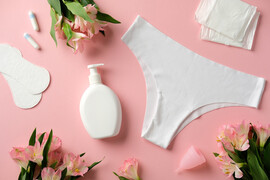
This article discusses a life-cycle assessment of menstrual products by scholars based in France and the US. They studied disposable organic and non-organic pads and tampons, period underwear, and menstrual cups. They measured these products in France, India, and the US based on several categories: global warming potential, fossil resources, land use, water use, carcinogenic effects, ecotoxicity, acidification, and eutrophication.
The study determined that menstrual cups are the most climate-friendly option, because they are small, reusable, and can last up to ten years. Period underwear ranked second in sustainability. Unsurprisingly, disposable menstrual products were the worst for the environment.
Another factor to consider is access. For those facing period poverty, reusable products, such as menstrual cups, pose a potential solution. At the same time, there can be challenges to using menstrual cups. They can cause health problems when they’re not inserted correctly or if they’re the wrong size.
BBC reporter Ana Santi also highlights the need for additional research and legislation to address chemicals in menstrual products. New research has highlighted the presence of chemicals, such as lead, in menstrual products. We don’t yet know how these chemicals might affect the body. In addition to research, we need legislation that ensures that companies are transparent about what’s included in the products and how they can affect our bodies.
We always talk about 'break even points' in these studies: how many times do you have to use a renewable product before it has made up for the emissions caused in its manufacturing and use phases, compared to a single-use product? ... For many products, it's often really high, like 100 times. With a menstrual cup, you only have to use it for a month before it breaks even on its carbon footprint.
SOURCE: BBC • AUTHOR: Ana Santi • LAST UPDATED: March 6, 2025