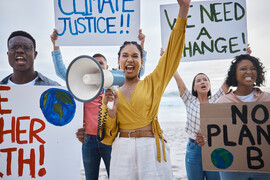
Black Women, Reproductive Justice, and Environmental Justice
This fact sheet by Marcela Howell, Jessica Pinckney, and Lexi White with “In Our Own Voice” shows how reproductive justice and environmental justice intersect. We have the right to form and raise families in safe, healthy environments -- environments that are free of harmful chemicals.
Black women and their families are exposed to harmful toxins in the environment at higher rates than white people are. Facilities that produce toxins are disproportionately located in Black communities and communities of color. Environmental toxins like lead can negatively affect health and quality of life. They can contribute to health problems that include asthma, reproductive health complications, neurological conditions, birth defects, and cancer. Some cosmetics, such as shampoo and perfume, contain toxic chemicals, such as asbestos, lead, and talc. These contribute to cancer, reproductive problems such as fibroids and miscarriage, diabetes, and other health problems. Black women and other women of color are at a higher risk because they are pressured to fit into European beauty standards that require use of toxic products, such as hair relaxers.
Clean air and water are less accessible to Black communities. As a result, Black people are more likely than white people to die from air pollution. Almost seventy percent of Black women have had tap water that is brown or smells unsafe, or have had to boil their water before drinking it.
Black women and their families are also more vulnerable to natural disasters, which climate change is making more severe. A high percentage of Black people live in the South, and a disproportionate percentage of Black people are low-income. Both factors make it more difficult for Black people to recover from natural disasters.
Federal legislation can help. The Environmental Justice Act would require Federal agencies to address environmental injustices. The Water Affordability, Transparency, Equity, and Reliability Act would fund infrastructure projects that can make water safer, more affordable, and more accessible. The Personal Care Products Safety Act would require cosmetic companies to submit information to the FDA and pay a fee that would go toward cosmetic safety. The Children’s Product Warning Label Act would require that all cosmetics marketed to children be free of asbestos or have a warning label.
The Reproductive Justice (RJ) and Environmental Justice movements work together to address both environmental racism and harmful policies and practices that contribute to adverse health outcomes that stem from toxic emissions, chemical exposures, climate change, and the degradation of life-sustaining natural resources like clean air and water. Black women and their families and communities are disproportionately impacted by exposure to toxins and a range of connected injustices that jeopardize environmental wellness, access to basic resources, and their overall health and quality of life.
Note: While these environmental assaults disproportionately harm Black women and Native women, all of us are harmed by them and need to fight to get them out of our environment.
SOURCE: In Our Own Voice: National Black Women's Reproductive Justice Agenda • AUTHOR: Marcela Howell, Jessica Pinckney, and Lexi White • LAST UPDATED: January 1, 2020