[music starts]
Marilyn Gagluicci: There was one student, Hunter, he befriended Frank and Frank had a motorized wheelchair.
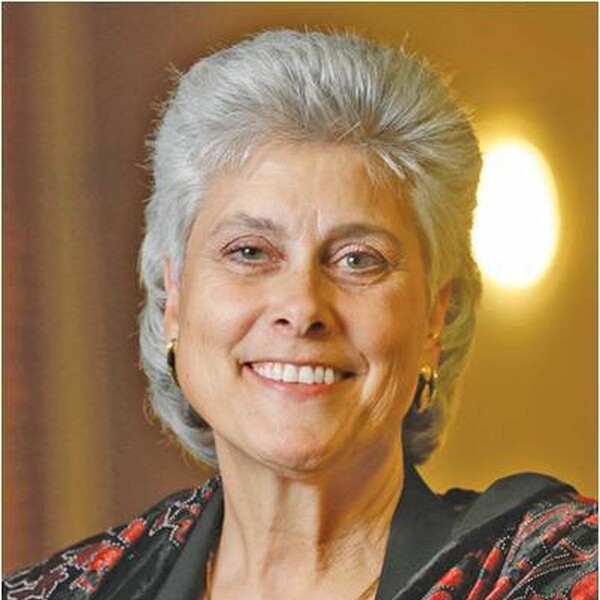
Mindy Fried: Dr. Marilyn Gagluicci is a professor and director of geriatrics education and research at the University of New England. Since 2006, she’s been sending her students into nursing homes to experience, first hand, what life is like for residents.
Marilyn: And so he went up to Frank and he said to Frank, Frank, how many, how many people do you think your wheelchair can pull? You know? And Frank's like, I don't know, hop on. So Hunter in his wheelchair holds onto the back of Frank's and they start down the hallway. And by the end they had 10 people attached to Frank's wheelchair. And Hunter wrote and said, that's the first time that I realized that we are all the same, that this is not about age, you that this is about the essence and the personality of the person. What a lesson for a 25 year old student to experience, experience, you know, to really understand the age might be different, but there's. There's a fire burning in Frank that Hunter just really got a sense of. It is powerful. I love those stories.
Mindy: That's powerful.
Marilyn: It is powerful. I love those stories.
Mindy: Most people want to age in place. We want to remain independent, near family and friends and everything that’s familiar. And a relatively small number of people between ages 65 and 74 - around 3% - live in a nursing home. That number increases slightly for people over 85. When people go into nursing homes or other care facilities, it’s generally because of an acute crisis - especially a fall - which is what precipitated my father’s move into an assisted living facility - or it could be chronic and acute health problems that require skilled nursing care. But nursing homes have a bad rap. If you ask anyone if they want to live in a nursing home when they’re older, you’ll get a vehement “no way”. They’ve heard scary stories about nursing homes being warehouses for old people, or maybe they’ve observed a family member who experienced preventable harm - like falling or an infection, or being given the wrong medication.
[theme music swells]
Marilyn is tackling the issue of quality care from another angle. She’s devoted her career to mentoring medical students and other healthcare professionals – in the hopes of improving medical care for older adults - including care for nursing home residents. And she’s done this in some innovative and unconventional ways, which is why I’m excited to talk with her today.
Welcome to Next Chapters, a new podcast that explores the remarkable landscape of growing older for women – from relationships and sexuality to health care, housing and retirement. Next Chapters is proudly sponsored by Our Bodies Ourselves, a globally renowned resource for the health and sexuality of women and gender-expansive people. I'm your host, Mindy Fried.
[music ends]
Listen, before we dive in, I'm just going to tell you on a personal note, I spent a year and a half caring for my dad who was in assisted living. And I ended up writing a book about it that was an ethnography because I decided that I was going to consider this an ethnographic opportunity.
Marilyn: Wonderful.
Mindy: So I resonate with a lot of what you are talking about. And I have some funny stories and some outrageous stories, as I'm sure you do too.
Marilyn: Yeah. And that just that you're using the word ethnography is like music to my ears. Because when I say it's qualitative-ethnographic-autobiographic-research, I know people just blank, you know?
Mindy: Yeah, absolutely. Well, you have created a unique project, which you started in 2006 called the Learning by Living Project, where medical students are admitted into nursing homes and they live there for around two weeks, 24-7, complete with medical diagnoses and standard procedures of care. I wonder if you can tell me about Rena Joaquin and the interaction you had with her that inspired your work.
Marilyn: So I teach two hours of geriatrics, how to work with person-centered care with older adults. Well, at the end of this two-hour class, Rana Wakim came to my office and she said, Dr. G, I want to learn how to speak with institutionalized elderly. Now those are two hot button words for me, institutionalized just really sounds like prison, something very negative, certainly not home-like. And elderly is a term that we're really trying to move past because elderly really implies people are frail or sickly and not really showing the viability and the passion and the dynamism that older adults maintain through to death.
So I looked at her, she looked at me and I'm thinking, geez, I have a teachable moment here. And I don't, this is what happens to me. I don't know how it happened, but I just said to her, would you live the life of a resident in a nursing home for two weeks? And you can imagine the pregnant pause. Now, some of the background on Rana was that she came to the U.S. from Lebanon after their family home was bombed a second time. She didn't know her grandparents. She hadn't been around older people. What was interesting after that pregnant pause was that she said she would do it. Now I had no idea if I could even do this project. If it was okay to do it, you know, legally, I just didn't know. And so I went to a friend of mine who was in a rural nursing home, a CEO. It was a for-profit home, which is taking a risk because they need to make the bottom line. And within 24 hours, he said, we'll take Rana this summer and we'll take her in as a resident. That was, that was how that started. And it just kept rolling from there. And so I created what's called a qualitative-ethnographic-autobiographic-research. So she's fitting into the environment. Of course, just by her age, she's altering the environment, but, but she was there to really look at herself and how she responded to all the experiences and activities that she engaged in through that two weeks' time.
Mindy: Why nursing homes? I mean, did you choose this place because you knew this particular guy or did you feel that there was some reason why you should place somebody in a nursing home?
Marilyn: Well, she asked to learn how to speak with institutionalized elders. And so for me, that meant nursing home. I have had students over the years live in assisted living, but I think there's something about the nursing home environment where they're going in with a diagnosis. So I give them a diagnosis of stroke.
Mindy: Wow. Wow.
Marilyn: Well, the way I looked at it, Mindy, was that I needed to do something constant through all the students that have done this and worked with physicians to get a mock med list. Their meds were M&Ms. And some of the homes gave them breathing treatments, no medications in that, but waking them up two o'clock in the morning to have a breathing treatment.
Mindy: Wow.
Marilyn: That they lose their dominant side. They're in a wheelchair, they're being toileted, they're being bathed, they're eating pureed foods, they're engaging in all the activities. They need to use the call bell to be transferred from their wheelchair to the bed or the bed to the toilet. There were some students, we actually had to kind of do something with that arm because they were just so used to using it. But by and large, students just kind of let their right arm and right leg or left arm, left leg, just left it. And so moving a wheelchair, one-sided was the first task to really figure out.
Mindy: And they did that for two weeks.
Marilyn: They did that for two weeks.
Mindy: 24-7.
Marilyn: Yup. 24-7
Mindy: Let's just start with the nursing home that you began with. Did they have their own room? Were they sharing a room with somebody?
Marilyn: Sharing a room, most nursing homes, know, at that time especially, they had single rooms. And so she shared a room. Part of the research of it, is for the student to write a journal. And they would send that to me each day and I would respond to it in certain ways. I would visit, you know, as a parent would. But at one point, Rana said, I'm talking with these ladies and I can't even remember living in my own home right now. And that was at day five.
Mindy: So has anybody freaked out and just said, my God, I can't do this, I need to get out of here?
Marilyn: What I found in this research is that day five for every student created some kind of challenge. Either they cried the whole day, they stayed in bed because they felt ill, they got a migraine. You know, it was just something. Day five was that day that the student, if you will, you know, kind of hit bottom. So what that taught me was that I really needed to pay attention to day five.
Mindy: So what did you do on day five?
Marilyn: Yeah, well, part of it was just talking with them, visiting with them that day, making sure I was there. And just saying this, this is okay, you'll get past this. Every student gets past it. I've never had a student leave the home. They all made it to the end. After they hit that low, that was when the sense of community occurred. That was when they totally engaged in the community. These were their buds. And they didn't want to leave the nursing home at the end.
Mindy: Whoa.
Marilyn: Which is really surprising, right? Because if I, whenever I teach about learning by living and I say to the students in the class, well, you know, what do you think happens at the end? And the students are like, the person's running out of the nursing home, never to go back to one again. And the truth is that males and females cried because they were leaving their friends. And one of my students, I picked him up in New Hampshire, brought him home, called him that night to see how he was doing. And he was back at the nursing home having dinner with his friends. He drove back by himself. And it was very eye-opening for them, life-altering for them. And Reinna Joaquin continues to maintain the lessons that she learned, which was the importance of eye-to-eye contact. The importance of touch, having your body at the same level of the person that you're communicating with. And even though she's OB-GYN, she's using those skills whenever she's working with her patients.
Mindy: And how many students have gone through the program so far.
Marilyn: Oh boy, I think there's something like a hundred students that have been through this.
Mindy: Do you have a sense of what proportion of the hundred people you've worked with have continued to work with older people?
Marilyn: Well, that's the interesting part, right? Because Rana Wakim had no notion about working with older adults. The truth of the matter is in OBGYN, she's going to be working with grandparents. Even in pediatrics, four in 10 grandparents are the primary care providers for their grandchildren. And if our students who are pediatricians cannot take care of the grandparents, that child will end up in foster care or in a care environment that's maybe not as loving as the grandparents would have made that environment. So for us, we do 45 hours of geriatrics, mandatory geriatrics training, 80 % is with older adults. We got a national award for that. We are not trying to make geriatricians out of all our students. We want to make sure our students are older adults and really know how to work with older people and be aware of how to enhance their health and quality of life.
Mindy: Okay. I was thinking about how my father was dealing with being, he was actually in assisted living. And there was the whole lineup before meals, the wheelchairs and the canes and the, you know, just, the kind of almost like high school throwback dynamics of who gets to sit with whom in the dining hall. that's it. Did you see those things play out as well?
Marilyn: I have a very interesting story about that actually. For the male students that did this, a lot of times I tried to get them into the Maine Veterans Home. We have five in the state. And this one particular student, I got into the one in Scarborough. And the first day, I mean, I'm there, you know, because I'm the parent. So of course, I'm really concerned about how they're transitioning into the home. Helping the staff as well because they're not quite sure what to do with a 20-something year old. And for dinner, the staff wheeled the student into the dining room, put him in the corner, facing the corner.
Mindy: What?
Marilyn: And thought that it would be less stimuli for the new resident and that it would be more manageable for him. He felt totally isolated and just felt disempowered by that. And the staff was trying to be very thoughtful. You know, this student happened to be an extrovert. He gains his energy by being with other people. And so by isolating him just was so challenging for him.
Mindy: So how did you intervene in that situation?
Marilyn: Well, once I found out about it, then we remedied it. I'm in touch with the CEO at each home and it's a tricky thing, right? You have different personalities, different staff. The students have different ways of coping. So I would say for anybody who wanted to run this kind of project, you really have to be on your toes all the time.
Mindy: Well, I was also thinking that because you had this feedback from the students and you were seeing, you know, sort of the positive things that they were learning, but also sort of problems within the institution. I'm wondering if you used some of that information to impact procedures or policies or, know, what kind of feedback you gave back to the institution.
Marilyn: Yeah, and it could be, you know, the smallest thing. For instance, a student loses their dominant side, the bathroom that they use, the toilet paper's on the right side. Toilet paper's too far away to grab with their left hand. It makes it, you know, it's a risk for them to fall off the toilet, right? So the homes, at the end of the immersion, we would always do a debriefing. The student with me, and we offered the home to invite whomever they wanted. Sometimes they did it with their board of trustees. Sometimes they did it with staff. Sometimes they did it with all the residents, invited the residents. And so a room could be filled. The student would talk about their experiences.
Now the key to that is that the student uses the “I” voice. “I experienced.” It's not that the home did this, that, or the other thing. “My experience of being in the home was”, you “I was frustrated by”, because this was not about the home. It was about the student learning how to be a resident in the home. This project has been in four different states, 25 different nursing homes. Each nursing home gave up a bed for the student provided the care, the food, everything. And no money changed hands just because people really wanted to advance the field of nursing home care.
Mindy: That says so much.
Marilyn: It does.
Mindy: You know you've now seen it, as you said, in four states, 25 nursing homes, and that's a lot of places for you to kind of track. But in general, do you see that there are policy or practice changes within those institutions as a result of this intervention?
Marilyn: By and large, I'm going to say absolutely there is, the homes that offered a bed to a student for no money, right? They clearly wanted to learn. They wanted to improve their care. So many homes really enjoyed getting those journals, the debriefings, talking with the students during their stay. And my point to them was remember that this is a 25-year-old, you know, give or take, and that they really don't know what it's like to be older. But in terms of creature comforts, the way the home operates, the movement, the activities, all of that, you know, the students had a perspective on that.
Mindy: They were doing the whole nine yards, like being in the place and using. I will tell you that when my father was in assisted living, at one point he said, all anybody does here is gamble, meaning bingo. And he was such a snob, but by the end he started playing bingo after a year and a half of being there. Yeah.
Marilyn: Oh yeah, students were into bingo, you know, and I always said, you know, I never liked bingo as a kid. I don't like it now. I don't think I'm going to like it when I'm older.
Mindy: Right. I think one thing that's so hard, and this is something I observed, is just, you know, you go into this facility and whoever you have been is no longer visible. All these new people that you're meeting at this, this, literally this final chapter of your life, don't know who you are and what you have done in your life. And that stripping of identity is really profound. What were some of your observations about how that was ameliorated or was it or how was that handled?
Marilyn: Well, the bottom line is everywhere you go, there you are, right? So nobody can really strip you of anything. If you have that essence and that fire in your belly, you're going to bring that through right to your last dying breath. But to your point, which I do agree, I had one student say, I feel like I just started elementary school. I don't know anybody. I don't know what the culture is, I don't know what to do, where can I play, you know, that kind of thing. And it was just an interesting comment for them to make.
So the nursing homes that I think paid attention to having life stories outside the person's room, something that would ground people in terms of whatever was important to the person, their profession or their skills or whatever it might be, master quilt maker, anything like that, you know, to make that known to the staff is just so important. And I think those were the homes where students felt that they were seen. You know, that they were valued, that they were skills that they had. Your point is perfect, right? You leave the environment that you know, that you're comfortable in, you're established in, and now you're in an environment that nobody knows you and how do you claim your space and how do you maintain those things that are really important to you? And that takes some maneuvering. Now our students have two weeks to do that. Research shows it takes six months to really fully engage in a nursing environment.
I just want to make mention that you use the term facility. And actually, you know, we're trying to move away from that too, because that sounds so un-home-like. The regulatory standards are such that it really makes the nursing home a medical model, which is very unfriendly in many ways. But finding a way, even with that extra component, does somebody really need to be woken up at two o'clock in the morning for medications or breathing treatment? And so for our students that went through that, they said, I will never do that to anyone who was a resident in a nursing home. It's not going to be the difference between life and death. We can manage to do medications at times that fit their schedule and keep them healthy or safe.
Mindy: Wow. Wow. Marilyn, you mentioned that your first Learning by Living program was in a for-profit program where you knew the CEO. Can you talk about quality of care in for-profit care versus non-profit care?
Marilyn: I think consumers, people are not aware of the difference between a for-profit nursing home and a non-profit nursing home. I think it's dangerous to generalize. You know, I bet there's some for-profit nursing homes that probably provide very good care. But in my experience, I always have people consider nonprofit homes because any of the proceeds from the home needs to go back into the home or towards the residents or the staff where a for-profit could end up in the CEO's pocket, you know, or the board of directors or whatever. Yeah, so I get concerned about for-profit care environments for older adults. I'm not sure, I'm not convinced that the care will be as good there. It's not about the staff, it's about the philosophy of the home that really makes the difference. I mean, the same thing could happen in a nonprofit, right? Poor philosophy of care. But overall, I think anybody looking for a nursing home should really be looking at the philosophy behind it and the connections that they can make when they check out a nursing home.
Mindy: You know, I did, before talking to you, looked at a lot of the research that you've done and it seems that you have really committed your life to, or your career, I should say, to trying to create stronger systems of care.
Marilyn: Thank you for that. Thank you for noticing that. I'm not sure how I got on this path, but boy, I sure am passionate about it. There's no question.
Mindy: Oh my God, absolutely. It's so impressive. What's your hope in terms of how this project impacts the quality of nursing home care overall?
Marilyn: Yeah. What comes to mind right away when you ask that question is my goal in life is to change the world regarding people having positive attitudes about aging. You can actually live 7.5 years longer just with a positive attitude. For the students that lived in these homes, they learned about the value of older people and connecting with the essence of who they are rather than how they look or how they walk or how they act. The staff were moved by the commitment of the student and for nurses and CNAs to work with a 20 or 30 something and toilet them and bathe them. It just made them aware, made them conscious of, and this is quote unquote, of the dignity that I have taken away from some of my older adult residents. I just, I was doing a job. I just didn't realize. And now here is somebody in front of me that's the age of my son, you know, and so it made it personal. And so I think, I'd say this project changed the world many times over in terms of the students who have been through it and the staff who have been affected by the students and the commitment that they made to the project. So I couldn't ask for a better outcome on that.
I don't know how it changed nursing home environments, but if the staff who remember being part of these projects and the students definitely remember, because I still hear from them, that they realize there's a lot more than the package that you see in front of you, that we are complicated beings, there's a lot to us, and that it's really important to connect with a person's essence than it is their disease. And remember, Mindy, in medical schools, all medical schools, we're osteopathic, but our students are being taught to cure, and I'm teaching students to heal, which is a very, you know, might sound like a fine line, but a touch can heal. Communication, eye contact, paying attention, being present and in the moment is all healing because you're honoring the person in front of you. And that's part of my goal is to have our students understand the difference between curing and healing.
[music]
Mindy: In 2014, Marilyn started another program, it’s called The Hospice Care Immersion Project, and it places medical students in hospice homes where they are providers of care for 5-7 days.
So I do want to spend a moment before we end our conversation talking about the hospice program because it sounds as if you, having had such success with the nursing home immersion program with medical students, you know, you dreamed up this other idea and I love your creativity and innovation. It's really special. So can you just tell me a little bit about what that one is about, what that project is about?
Marilyn: So there were four second year medical students that came up to me and said that they really wanted to learn more about palliative medicine and palliative care and end of life care. And so I reached out to the Gosdell Memorial Hospice Home, again, a nonprofit hospice, about a half hour from our institution, our school. And I had the methods already from the Learning by Living nursing home immersion. Well, in this one, I couldn't have students go in and act like they're dying. They wouldn't have any idea what that is, right?
Mindy: That’s hard to pull off, isn’t it?
Marilyn: Yeah, that's to pull off. And so I asked if they could be providers of care. And it was agreed. Again, no money in this project. On average, in a weekend, there'll be 48 hours, there'll be five deaths and the range is two to 10 deaths. Every student is concerned before they go in that they're going to say the wrong thing or they're going to cry all 48 hours. And then when we debrief on Sunday, I've had students who wouldn't leave, they just stayed or now they're volunteers. They just had the best time. There's poignancy in this. And what they focused on was the amount of life in the home. Even after 10 deaths, there is still life that is happening in that home, which is a remarkable finding. And so to really feel again that they were part of something important in somebody's life, definitely can't cure in hospice, definitely have a lot of power and healing. And so that message has totally come through in the hospice home immersion. We can't teach this stuff in the classroom. They have to live it. I think what is wonderful is that we have future physicians that are in training now that are willing to go way outside their comfort zone to learn to be a better physician. So to live in a home where upwards of 10 people could die in 48 hours, to be in a nursing home that really culturally has terrible reputations, right? And to choose to do that, to be a better physician, I couldn't ask for more. That, that, that's a gift to work with these students.
Mindy: Are there other projects that are similar now?
Marilyn: You know, I know at Purdue University, they have independent living apartments for older adults, and they make sure to keep a couple apartments open and students can live there for a semester or two semesters so that they're engaging with independent older adults, which is fabulous, right? I mean, it's by living in that environment that you really get to make connections and really create community. If anybody is ever interested in starting either of these programs, I have a manual on them, how to do it. You might be happy to share it and get more students across the US into these kinds of learning experiences.
Mindy: I just, you know, listening to talk about these innovative programs that you've created and maybe I'm inserting a little of my own issues around death. But I'm wondering for you, because you're up against it in this very close way and working with students who are even closer. How has doing this work affected your attitudes, your feelings about your own aging and ultimate?
Marilyn: Yeah, that's a great question. I'll tell you, when I was a Girl Scout and I went to a nursing home for the first time, I was devastated and depressed for a week. So it just amazed me that I ended up doing a nursing home immersion project and just loving the environment. Not that I choose to live there, but, you know, I know the value and the sense of community in those homes. In terms of my own aging and death, if you think about it, in 10 years, I've probably been through at least a thousand deaths that these students have been through, right? We're writing about those. We're really diving deep about that. So in some ways, there's a lot of death in my life. But the truth is, Mindy, that really what I've learned from this is the importance of being present and in the moment. There's no question that I'm a workaholic. I can be distracted and go in 10 different directions at once. But when I land in front of someone like with you today and be fully present with you, that is an amazing gift to me. And it has nothing to do about age. It has nothing to do with me being 70. You know, it just, it is. And so it kind of puts things in perspective for me. Just live each day.
[music starts]
Mindy: Check out my other podcast, The Shape of Care, to take a deeper dive into the nitty gritty world of caregiving, including the challenges of finding or providing care, whether for an aging spouse, for parents or other relatives, the impact of low wages on the quality of elder care, the union activists who have bargained for good wages, and the policy makers who are fighting to improve the quality of nursing homes.
[theme music to credits]
Do you have a story to share about growing older? We’d love to hear from you. Our phone number is: 1-8-6-0-8-0-0-2-1-3-0. That’s 1-8-6-0-8-0-0-2-1-3-0 or e-mail us: at [email protected]. That’s [email protected].
Next Chapters is co-produced by me and Karen Given, who was also senior editor and engineer. Thanks to our project advisors from Our Bodies Ourselves, including Christina Barmon,Toni Calasanti, Joan Ditzion, Kim Hunt, Laura Prieto, Wendy Simonds, Taura Taylor, Dr. Imani Woody and Erreannau Zellous. Thanks to Jonese Austin, Eva Parker Passalacqua, and Kiki Zeldes for their work on creating the podcast website. Music is from Blue Dot Sessions.
For more information about the show, go to ourbodiesourselves-dot-org-slash-nextchapters. While you're there, please consider donating to keep the show going. You'll find the link at our website. The address again is ourbodiesourselves/nextchapters.
I’m your host, Mindy Fried. See you next week!
Do you have a story to tell about growing older, or questions for us? You can reach us at 1-860-800-2130 or by email at [email protected].
For more information about the show, go to ourbodiesourselves.org/nextchapters
Show More