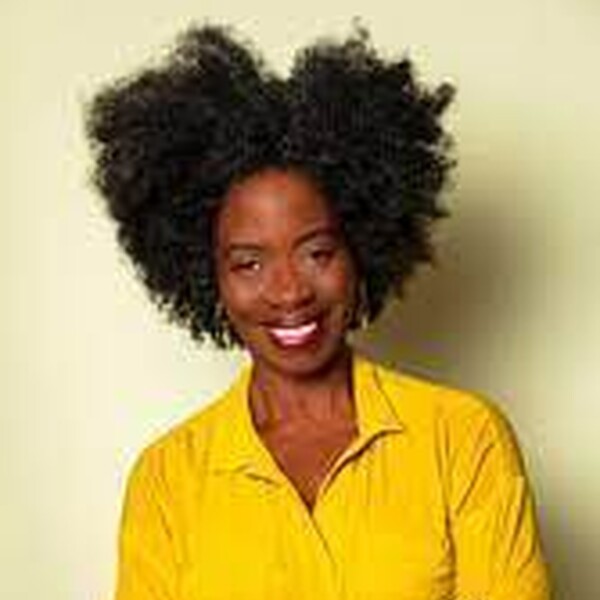
Elizabeth White: Our Bodies Ourselves, was so pivotal, you know, for me and I think just for so many other women. And I'm glad to see that it's still a franchise and that new women, you know, have the possibility of learning about themselves through that book. I mean, there was something where you invited young women to get a mirror and look at their vagina. And that was, I must've been 19 and I had never done that. And I think for so many women it was like, to have on your body some part that you had never really seen. It was just an amazing gift that the book gave, I think, to millions of young women.
Mindy Fried: That’s Elizabeth White, the founder of NuuAge Co-Living, a start-up business designed to address housing and age discrimination.
Over 4 million women 65 and over in the U.S. are living at or below the poverty line, according to the U.S. Census Bureau. Housing is generally the highest expense in an older adult’s budget. As housing costs rise, it becomes increasingly difficult to afford. These affordability challenges are disproportionately felt by older people of color. But there are other challenges. According to Jennifer Molinsky from Harvard’s Housing an Aging Society Program, very little of the nation’s housing stock offers even the most basic accessibility features like no-step entries and single floor living.
Before Elizabeth started NuuAge, she wrote an essay that went viral about her struggles in the workplace. That led to her writing a book, called 55, Unemployed and Faking Normal, published by Simon and Schuster. I wanted to hear about how her writing on ageism in the workplace led to her work on addressing the housing crisis for older women, especially older women of color.
And later in this episode we’re going to learn about a model that’s helping to solve the housing crisis for older adults in Colorado from Alison Jocouvsky, Founder and CEO of Sunshine Homeshare.
[theme music picks up]
Welcome to Next Chapters, a new podcast that explores the remarkable landscape of growing older for women – from relationships and sexuality to health care, housing and retirement. Next Chapters is proudly sponsored by Our Bodies Ourselves, a globally renowned resource for the health and sexuality of women and gender-expansive people. I'm your host, Mindy Fried.
[music ends]
So first of all, I just watched a clip from the PBS NewsHour that captured your life at a very different point where you talked about your own career trajectory. So you've got a BA from Oberlin, a master's degree in international studies from Johns Hopkins, an MBA from Harvard. You worked at the World Bank, and then you decided to create your own business, which was a bold move. And then the market crashed in 2008. And when you tried to re-enter the workforce in your mid-50s, you hit a wall. So can you just describe that for me? What was that about for you?
Elizabeth: So, and I actually see it happening again for people now, because I'm in DC with all these federal layoffs. In the federal government, over 40% of the workforce is over 50. What the data says and what I experienced personally is that when you lose your job in your 50s, it's much harder to find something commensurate in paying status with the job that you left. So I had this background, never anticipated that it would be hard to find work, you know, did all this stuff, the little coffees, the little informational interviews, the reading about the companies and nothing was clicking. You know, sort of weeks turn into months and you are now racing through your savings. Suddenly you can't afford the dinners anymore and maintenance stuff that is happening in your house that you can't do the upkeep on. So you stop wanting to have people come to your home. There's kind of all of this stuff happening. And at one point for me, you start to wonder if you're ever going to get back.
Are you visiting this place as a tourist, or are you a resident? You will never come out of it again. And it was sort of around there that I wrote the essay that described what it's like to land here when you have all the props and credentials. And we live in a culture where you don't talk about personal failure. You don't talk about money. And since we don't talk about it, then you think you're kind of by yourself. And when I wrote the essay, thousands of people responded, me too. So I had kind of a unique voice in that it wasn't just a research topic for me.
Mindy: Absolutely.
Elizabeth: I had the background of the people who did research it, but I had the lived experience of the people who were going through it. And my book is really about the trauma of late-career job loss.
Mindy: Now that you're, as we all are a bit older, you're thinking about housing and I'm wondering what led you to that shift in focus.
Elizabeth: You know, so I started to get invited around to speak. What I would hear from women in particular is, look, if I had my housing together, I remember this one woman, she said, I can extreme coupon it the rest of the way. I wanted to do something that dealt with housing, affordability, loneliness, women. And I saw all of these co-living housing, but they were for nomads or the workforce or – there was nothing sort of specifically geared for older people. And I thought, let me like, maybe focus on that. And my friendships span from 30s to 80s. One of them told me, you should apply for this program. It's a venture studio. You know, it's an 18-month program and I think it would be good for you. So that allowed me to hire architects. And I suddenly had some resources, both cash and kind, to be able to do that.
Mindy: Mmm. Talk about the model itself. How does it work? When I think of co-living, I think people who want to live together and maybe one person has an apartment or a house and somebody else moves in, but you're looking at it really differently, right?
Elizabeth: Yeah, so there and I think there are different models and we're working on sort of a range. So at the Golden Girls level, there are women who have inherited a house or maybe their partner died and they would like advice on if we were to change anything in this house to make it more suitable for co-living, how do we recruit women, how do we think about the matching? So there's a chunk of work that we have gotten much more involved in. Then there is the concept of could New Age co-living be two floors in a multifamily building that could be intergenerational, paying much more attention to some of the universal design features that deal with the accessibility issue that some of us right now are dealing with and soon more and more of us will benefit everybody. And then the final one is freestanding where the whole building is new age co-living. There is a developer who's approached us who has two houses that he wants us to do a test run. We can identify a group of women who are interested in maybe piloting, living together that we can then interact with, learn from. And so what I want NuuAge to be able to bring a developer is where we have a lot of knowledge about what community means, what works in terms of design, what doesn't work, et cetera.
Mindy: In just reading the literature, I'm just gonna find a quote that I found from you. “NuuAge is an affordable co-living model with enhanced amenities for older adults aging alone on moderate incomes. NuuAge provides dignified housing at scale.” Let's just start there. Like how are you looking at this whole notion of amenities?
Elizabeth: You know, so we're looking at both partnerships in the community. You know, so I'm a big Pilates person, for example. Could you get a discount for the people who want to do Pilates in the community? Could we have a relationship with a furniture provider who has furniture that is more scale to what these spaces would be looking like? And then there's sort of what they call the tech stack. Refrigerators that tell you, oh, you've run out of milk and eggs, toilets that can tell you whether or not you're dehydrated. So we're just looking at the sort of menu of services and then what people are prepared to pay for. So it's kind of looking at what are the needs and then what can you do through partnership? What can you do through technology? We did a couple of surveys recently kind of looking at some of this.
Mindy: So what do you perceive as the biggest challenges? I mean, it's a big undertaking and this is not your first rodeo. You've really, you've taken on difficult things before and you've had some successes. So where are the challenges in this particular venture?
Elizabeth: I think it will be finding the right developer partner. Part of the reason I like multifamily is that in parts of the building you can charge market that could help to subsidize the two floors where you're doing something else. So it's a particular kind of developer partner.
[theme music in background]
Mindy: Elizabeth is still in the very early stages of planning and development for NuuAge Co-Living.
So we wanted to talk to someone who had been working on the co-living model for a bit longer. Alison Jocouvsky is working on this problem from the non-profit side. She’s the Founder and CEO of Sunshine Homeshare Colorado.
[music ends]
Mindy: Sunshine Homeshare Colorado is the first homeshare nonprofit in the state of Colorado. So can we start with the basics? What is a homeshare?
Alison Jocouvsky: A home share for the purposes of our organization is that we have what we call home providers. So someone who has a home, they can be a renter, but they do have extra space in their home. And we are really basically helping them find the right housemate. So helping them through screening and vetting to find somebody that they want to live with.
Mindy: And what inspired you to create this program?
Alison: At the time, Denver in 2015, if you think back, we had this huge housing shortage and my phone was just ringing all the time. I need a place to live. I have nowhere to go. My mom is in her house and I can't afford care. And so I happened to hear about the home share model. There are many around the US, they are very common in Europe and it just sort of seemed like something that we needed.
Mindy: And did you look at the other model?
Alison: Oh Sure. You know, I think sometimes life puts people in your path at the time they are supposed to. And so I was introduced to this amazing, amazing woman who is now a friend of mine. And she had a wealth of experience in starting nonprofits and data collection and all these things I knew nothing about. She really helped sort of guide me, but the process really started with just calling, right? Calling Vermont, calling Florida, right? Calling different programs and just saying, how do you do this? What does an intake look like? What questions do we need to ask? And so it just started with a lot of an investigative calling on how their programs run. And then Lori, because this was her expertise, really helped me develop, you know, a logic model and a flow process and just all the things that you really need in order for an organization to really get off the ground.
Mindy: I'm actually, as a sociologist, I do a lot of evaluation work. So I know what a logic model is and a theory of change and all that stuff. But can you just tell me in your words, what is a logic model?
Alison: A logic model is really just thinking about your process steps and who your partners are going to be and what your outcomes are that you want to achieve and how you are going to get there and what are the other people and resources that you have in order to organize your work and your process to help you get to the outcomes that you're hoping to achieve.
Mindy: So you approach this in a really systematic way to get an understanding of what you wanted to achieve and all the steps you needed to do to get there.
Alison: The landscape, right? Like what, how many people over the age of 65 or 62 are living, you know, in independent homes? And what are the economics of the people who were aging and what was happening in the housing climate? So it also involved a lot of research on this is why this model is really important right now.
Mindy: And so you looked at all these programs and you also looked at the need and you mentioned the housing shortage. Were there other problems that you felt you wanted to address in creating this kind of homeshare model?
Alison: I mean, home sharing is a win-win for many, many aspects of aging. We always say that there's all these ramifications from it that are so positive that aren't necessarily why you create the program, but are the outcomes. So people who are now earning income and paying cheaper rent are improving economically. Loneliness and isolation certainly was a factor that plays into home sharing. And the other piece is that people struggle with being able to maintain their home and get where they need to go and make meals. And so while it was started with, here is space in a home, this creates affordable housing, the out of what home sharing provide are really wide on both sides.
Mindy: It gets me thinking about whether you're in touch with local and state government and are they supportive of what you're doing because it seems like a real asset to communities in general.
Alison: So that's a tricky question. We at one point had had funding from the city of Denver, but we have subsequently lost that funding with the change of administration and change of priorities. We do work with many cities and get smaller grants. We definitely have very much tried for state funding, but up until this point, state funding is either for construction or fixing, and we do not need to construct and we do not need to fix. We just need to bring people together. So, home sharing is interesting because the traditional buckets of funding do not necessarily work for this program. And so, there really is a paradigm shift that we are also trying to also convey because I think that it makes sense in a lot of ways to use space that we already have available without having to pay to build anything. But that doesn't seem to be where a lot of our funding is right now.
Mindy: Hmm. It sounds like, you know, another example of a challenge, what we're dealing with in this administration.
Alison: I mean, and on all levels, we're just right. And I mean, home sharing is unique and it is not, it is not something that is, I mean, I would say it's way more common than people realize and that along the way we have learned, it is not our job to convince people to share their homes. It's our job to support people who have recognized that they have to share their homes to make it safe and to be support, and you know, and to provide care and help with communication. But we're not convincing people that this is right for them. That is something they have to get to on their own.
Mindy: So let's just talk a little bit about the program itself and how it works. And you did, I mean, you said in the beginning that you match, you vet people and you match people. If I were interested in a home share, can you just walk me through what I would need to do?
Alison: Currently, right now, you would apply online. And once we get your application, we are going to call you and we're gonna do a phone screening. And if you are someone that has a home, we're gonna set up a time to go out to your home. And if you're someone looking for housing, you're gonna come into our office and we are gonna do what we call a full social work intake.
Right. And we're going to ask about your likes and your dislikes and your health and your values and your work experience. And we're really going to try to get a pulse on who you are and what's important to you. And then we're going to talk about things like what are things that you might need help with, or what are things that you're willing to help with. Right. I certainly could shovel snow. I love to drive. I don't mind to cook. I could walk a dog. I could dog sit all the things. And then we're going to do the deal breakers, which are sort of more of our yes or no's right. They’re, would you live with a dog? Would you live with a cat? Would you live with a smoker? And then it just kind of slowly goes from there. So then at team meeting, we sort of hash out all the people that we talked to and we look at who we could introduce to who based on all those likes and dislikes and values. You know, we are also pulling background checks. We're checking references. We're sort of doing all those screening and vetting things behind the scenes. And then people meet and they meet again. And we say, you bring in your kids, you bring in your neighbors, you bring in your friends. If there are two dogs, you have the dogs meet. If there are two cats, you have the cats meet.
And so after all of that happens people will call us and say, we're ready to do the two week trial match. And that's where the person comes with a really small suitcase and they give it a go. And usually it goes really well. Most trial matches move to matching, but sometimes it doesn't. Sometimes the noise in the basement where the room is, isn't the right fit. Sometimes it doesn't feel like the personalities are right. And so after the trial match, then people decide if they're going to move in together. And we come out and we do what's called a home share agreement. And it really is the nuts and bolts of how many loads of laundry and what space in the kitchen.
And we have learned we have to spend a lot of time talking about communication. How are you going to communicate if it feels like something is upsetting you? And it's something that we go over and we talk about different communication styles. And then we set people loose. And then we actually have this now new amazing team of volunteers and interns. And so we check in on our matches for the first year and we do it regularly. Wow. And people can call us anytime. We will usually try to get them to talk to each other first. And if that doesn't feel like it's working and they need our support, then we will go back out and mediate help with discussions, and when necessary, help with what we call an exit plan.
Mindy: Wow. And you said that most are successful. So how often do you find yourself going in and mediating? How often do you find yourself helping people separate from one another?
Alison: You know, I mean, matches end, it is not a forever, right? That is just the nature of the program. I think since we really have beefed up helping people work on communication skills and we are checking in more frequently on our matches and we are offering support that way, we are actually seeing a lot less conflict. And so we're actually seeing a lot, a lot greater success in people staying matched for longer amounts of time.
Mindy: So what's a successful match?
Alison: There is no two matches that are the same. But the best answer that I can give is that when people like living together, right? Like they genuinely care about each other. They're generally concerned about the other person's wellbeing. That's a good match. If we're really doing our job well, we're kind of making these little micro families, right? That is not what everybody wants from home sharing, but we also tell people our program is not room rental, right? Because even if somebody comes in to us and says, I don't really need companionship, when we go back and we ask six months later, what has been the best part of this match? It's always the person. There's always an economic factor. There's always, it's so nice to have help. There's always so nice to know there's someone to let my dog out. But really it is the, there's someone in the house that asks me how my day is. And that's the most important piece.
Mindy: Yeah. So can you tell me about a couple of your successful matches?
Alison: Oh I mean, we have so many. Our longest running match is Marty and Sally. They were our first match and they have now been living together for almost eight years. You know, Sally is in her eighties. Marty was in his seventies. He's a Vietnam vet. He had a lot of health stuff going on. And theirs is a little bit split where Marty's in the basement and kind of has his own space down there. And Sally is upstairs, but they go to movies together. He has gotten to know her, you know, her neighbors. And when she was in the hospital, he called us and said, Sally's in the hospital, I had to get her to the hospital. And so they just have this beautiful friendship that is allowing them both to age in place. Every match is different, right?
Like we have Flo. She is a lawyer and she doesn't have children and she had a health scare and she was worried that there was nobody in the house. And Twisile is a graduate student from Malawi. So Twisile met Flo. Flo charges her a couple hundred bucks a month. They travel together. They have meals together. She watches the cat. Like it, they've just become, Flo calls her her granddaughter. so I know when Twisile graduates, it's gonna be really heartbreaking for her when she leaves, but they have this wonderful friendship.
Mindy: What’s the youngest person you've matched with the oldest person? I'm just curious.
Alison: Oh, the youngest with the old, you know, actually that's funny. So, Michaela is our programs manager and social worker and started with us as an intern getting her MSW from DU. And she was going to graduate. And Dorothy was 97, I think 97. And we had introduced Dorothy to multiple people. She shot them all down and Michaela was about to graduate. And she looks at Michaela and she goes, I want to live with you. At the time, Michaela was 24 maybe, and Dorothy was 97. And Michaela actually lived with Dorothy almost until her death, like for over a year. And they went to the theater and Michaela cooked and it's really interesting because she doesn't share it a lot with our clients that she home shared. But I think it really has impacted her, how she navigates this work in her life as well. So I would say that was probably our biggest span in ages. But we have like a 22 year old and a 70 year old right now. And a lot of people the same age, right? Women that are the same age that say I'd actually like to live with someone closer to my own age who likes to go do things. So it just runs the gambit.
Mindy: I was thinking with Michaela, it was sort of like on the job training.
Alison: Yeah, yes. Yeah. Yeah. And the beauty of it was she was able to save a lot of money, which let her be able to think about her future and her next steps because she saved so much money in this home sharing match. It doesn't get better than that.
Mindy: And I think what we were saying is, you know, even though she doesn't talk about the impact that it might be having on her work, how can it not? If she lived with somebody for an entire year through the program, it must influence her thinking.
Alison: Of course. of course. She is just amazing. and again, we have matches that we call the easy matches, which is where you have someone 60, and maybe they're just trying to save money for retirement. And they really could do this on their own, right? They do not need all of the social work and the support. But they want to be able to call if something's not going well, they want to ask questions. And then you have the 94 year old and there is high service exchange and they need a nighttime presence and the family needs to be involved. And, so that's where the real skill, on what does it take to support somebody in their nineties. Cause usually home sharing is a piece of it. And there's a lot of other pieces of the puzzle that also have to be in place to support someone to age in place in their 90s.
Mindy: Yeah. I mean, think also, you most people, and you know this better than I do, most people want to age in place and a lot of homes are not set up to be able to age in place. And so, you know, I think that public policy is so far behind in that way. You know.
Alison: Yes. Yes. It is woefully lagging behind. And at least, you know, here in Colorado, there's so much conversation about build, build, build. And it's like, we don't just need to build, build, build, right? We need to preserve. We need to support. Right. We need to figure out how to use space that's already here. Our neighborhoods are richer when we keep our older folks in our neighborhoods. And I also say you wouldn't need our program so much if people actually looked out for their older neighbors, right? Like if you had an older neighbor and you asked them if they needed anything from the grocery store or just shoveled their walk when it was snowing or just checked in on them, you would still need our program because they need the money, but not as much. We just don't do a great job as a community taking care of each other.
Mindy: Yeah. One question is still looming, like somebody who wants to access this Home Share program, how do they find out about you? Does it cost money to participate in the program? How does that piece work?
Alison: Yeah. And some of this, again, we are in a point of reevaluating what we do, because not charging anything is not sustainable anymore. But currently it's word of mouth, it's social workers, it's doctors offices, it's Facebook. There doesn't seem to be good rhyme or reason where people find us. They just seem to be. Right now we ask people if we make a match to donate back to the organization on a sliding fee scale. So there is not a charge. We are in the process of actually reevaluating a social enterprise model that is going to be looking at fees of some sort and what that means for the organization for some sustainability. And the other exciting thing that we are working on right now is we received a grant to look at adding technology to what we're doing. But what we know is not everybody needs 30 to 40 hours of care management for every match. You probably could go online and you probably could answer a lot of those questions and you probably could meet with somebody on your own. But maybe there are some videos or some tools or you need to call us. Growing and scaling means that we need to be looking at other ways to do what we do.
Mindy: Yeah, yeah. So you have a lot on your plate you're trying to grow into.
Alison: We do. It's exciting. It's really exciting. It really is necessary and just feels like the time is right to be doing this for our organization.
Mindy: Is there any association of home share providers across the country? I mean, are there, cause you mentioned that, you know, I was thinking, you know, Florida and, know, all these places that are doing it as well. Is there a way to stay in touch with them?
Alison: Yes, I think there's 65 to 70 home share programs across the US and all over Europe. I mean, there is an international home share organization that's very robust and they have conferences every year and every country in Europe almost has some kind of home sharing program.
Mindy: Wow. So you're part of a movement. It's such a logical thing.
Alison: You know, it's funny, one of my board members who I love, and he is in his seventies and he said, I grew up in my grandparents’ rooming house. He said they lived in New York. They came here as immigrants. They took in lodgers and it was the way that they were able to make a living and make ends meet. And I grew up in this house with people coming in and out all the time. He's like, all you are doing is taking something that people have been doing since time began, right? Like people have rented space as a way to make a living since time began. And all you're doing is making it safe and structured. And I never thought about it that way. But when he said that, I was like, yeah.
Mindy: Yeah, you got something there.
Alison: But yes, I would say home sharing, it's becoming a lot more talked about, less weird. Right? Like, why would I want anyone? And I think that is because so many people who are 65 and older have saved so little for retirement that if they do not share the space in their home, they're going to lose it. And so I think that part of it is just the economics of who is aging, that this is not, it's not an option. It is the only way that they are able to keep their house.
Mindy: Yeah. I think it's an incredibly powerful model. I guess maybe my last question is, you know, what are the biggest challenges you think you're facing right now as you're moving forward? It sounds like you've got a lot of exciting things with the technology piece. Where are the challenges?
Alison: Funding. I mean, home share programs are hard to fund. They are hard to keep funded. When you look at the cost saving benefit of keeping people out of skilled care and nursing homes and off of public benefits and all the things that you get from shared housing, the economics are immense. But it's hard to make that case and keep programs funded. And so I think the biggest challenges are always funding, funding, funding.
[theme music starts]
Mindy: If you're interested in the home share model, check out the National Shared Housing Resource Center, where you can search for home sharing programs throughout the U.S. You can find out more about this resource in our show notes.
Do you have a story to share about growing older? We’d love to hear from you. Our phone number is: 1-8-6-0-8-0-0-2-1-3-0. That’s 1-8-6-0-8-0-0-2-1-3-0 or e-mail us: at [email protected]. That’s [email protected].
Next Chapters is co-produced by me and Karen Given, who was also senior editor and engineer. Thanks to our project advisors from Our Bodies Ourselves, including Christina Barmon, Toni Calasanti, Joan Ditzion, Kim Hunt, Laura Prieto, Wendy Simonds, Taura Taylor, Dr. Imani Woody and Erreannau Zellous. Thanks to Jonese Austin, Eva Parker Passalacqua, and Kiki Zeldes for their work on creating the podcast website. Music is from Blue Dot Sessions.
For more information about the show, go to ourbodiesourselves-dot-org-slash-nextchapters. While you're there, please consider donating to keep the show going. You'll find the link at our website. The address again is ourbodiesourselves/nextchapters.
I’m your host, Mindy Fried. See you next week!
Show More