A Rabbi's Perspective on Abortion, Justice, and Religion
We often think of the movement in favor of expanding abortion access as secular. However, there is a long history of religious activism in favor of reproductive rights and reproductive justice, including abortion access.
In this article, the Center for American Progress speaks with Rabbi Danya Ruttenberg about religion and abortion access. Originally published before Roe was overturned, the article's main points remain relevant, even though the landscape around abortion access has changed.
Many people of faith work for abortion justice because their religious beliefs inspire them to do so. Rabbi Ruttenberg notes that the media often overlooks these stories.
Judaism teaches that life does not begin at conception. According to the Talmud, the embryo is “mere water” for the first forty days and then becomes a part of the pregnant person’s body. Jewish law not only allows for abortion. It requires abortion if the pregnant person’s life is at risk, and takes their mental and emotional health into consideration.
Laws banning abortion therefore violate the freedom of religion of Jewish people. Abortion bans impose the perspectives of some Christians onto everyone else. They violate both the Establishment Clause and the Free Exercise Clause of the First Amendment.
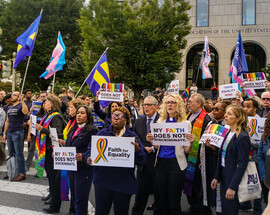
Jewish clergy and other religious leaders have organized against growing restrictions on abortion. In 2020, for instance, a network of Jewish clergy launched Rabbis for Repro. Their annual Repro Shabbat informs people about opportunities for abortion justice advocacy work. They also partner with other faith-based organizations such as Religious Coalition for Reproductive Choice (RCRC) and Catholics for Choice.
Rabbi Ruttenberg highlights that there is space for religious people in the abortion justice movement because every religious community is affected by abortion access.
The majority of people of every religious tradition believe in abortion justice—and not despite our religious or spiritual or faith commitments, but because of them. Because we are called to pursue a more just world and know that abortion bans deepen every inequality that exists in our society. Because we know that every person has the right to dignity, autonomy, and self-determination. Because we believe in a world based in liberation, not one based in oppression. That has not been the narrative the media, or broader society, has heard; and it needs to.
SOURCE: Center for American Progress • AUTHOR: Guthrie Graves-Fitzsimmons • LAST UPDATED: February 17, 2022