Chronic Conditions
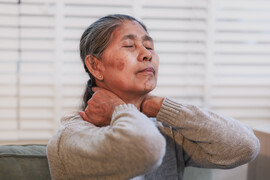
Chronic conditions are persistent, long-term health concerns. Whether they are physical, mental, or both, they affect our ability to live our lives as we wish. They may wax and wane over time or be a constant presence. What is considered a chronic illness or condition can vary. We may feel ill, and our health care providers could say we’re not, or we may feel healthy and the provider says we are ill.
Chronic conditions are an important health issue for women and gender-expansive people. Women are more likely to seek medical care at all ages, and we have longer average lifespans than men. But we experience numerous chronic conditions more often than men do. And patriarchy sees our bodies as flawed and inferior to begin with. As a rule, women’s health remains underfunded, underacknowledged, underresearched, underdiagnosed, and undertreated.
Chronic conditions are even more likely to strike those of us who are BIPOC, transgender, lesbian, and queer, compared to cisgender, straight, and white people. Racism, sexism, homophobia, and transphobia add to the stressors that take a further toll on our health. And there’s a long history of these multiple oppressions – from myths that Black women have a higher pain tolerance, to lesbians being labeled as inherently mentally ill, and disabled women being sidelined from their own care.
While living with chronic health burdens, women also shoulder the majority of domestic labor, child-rearing, and carrying the mental load for families, while typically working outside the home as well. Our caregiving work routinely gets devalued, financially and morally, even though it’s vital to our survival as a species. Grind culture demands that we be constantly busy and productive in service of capitalism, rather than taking time to support one another. Less stable employment and higher poverty rates among women, especially women of color, mean we can’t afford the care we need within a for-profit system.
Having trustworthy information about our chronic conditions helps us make decisions for ourselves as we face these many challenges, build community, and strive to change the systems that make things even tougher for us.
Certain chronic conditions disproportionately impact women, yet remain less visible and more difficult to diagnose. Women have higher rates of chronic illnesses such as osteoporosis, dementia, and autoimmune diseases like multiple sclerosis and lupus. Many cancers disproportionately affect women.
But women who report non-specific symptoms may find themselves dismissed out of hand. So do women whose symptoms differ from men’s typical symptoms of the same illnesses, as with heart conditions. Heart disease is the dominant medical model for what a chronic illness is like, and women’s experience may not fit that model. Migraines, depression, and anxiety, for instance, are intermittent chronic conditions, quite unlike heart disease.
Shame and stigma still surround matters of reproductive, hormonal, and sexual health in particular. And it wasn't that long ago that medical science considered women’s physical symptoms as evidence of female weaknesses such as “hysteria.”
We suffer when other people, including health care providers, don’t listen to us or believe what we say about our pain and what our bodies are going through. Like society in general, the medical care system often marginalizes women. We experience greater delays in diagnosis, a lack of adequate representation in medical research, and the impacts of institutional sexism. And a profit-driven health care system makes it more difficult to access treatment. We suffer when we cannot access health insurance, or enough health insurance, including when medicaid gets cut. Corporate profiteering means sped-up health care visits, and the increasing use of AI further threatens our ability to reach the actual persons who can help us. We need, instead, a society that allows people to be human, with all our weaknesses and frailties.
Chronic conditions or illnesses occur across all social, cultural, economic, political, and geographic settings. This section of the Our Bodies Ourselves website contains resources that describe diverse experiences of chronic conditions. We explore the diagnosis, care, and treatment of chronic conditions as well as their intersections with disability and disability justice. We identify autoimmune disorders and chronic pain as areas of special interest where women are disproportionately impacted. We recount the history and politics that shape what it’s like to live with chronic conditions now. These resources increase our knowledge and guide us on how to navigate the issues associated with chronic conditions across the lifespan. They also point us to a new understanding: needing and giving care are intertwined, a part of being alive that we should recognize and honor.
For more on our perspective on chronic conditions and disability, see Disability and Chronic Illness through a Feminist Lens.