Our Story
The Inspiration
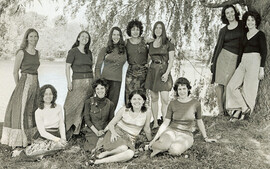
In May of 1969, as the women’s movement was gaining momentum, a group of women in Boston met during a “female liberation conference” at Emmanuel College. In a workshop titled “Women and Their Bodies,” they shared their experiences with doctors and their frustration at how little they knew about how their bodies worked.
The discussions were so provocative and fulfilling that they formed the Doctor’s Group, the forerunner to the Boston Women’s Health Book Collective, to find out more about their bodies, their lives, their sexuality and relationships, and to talk with each other about what they learned.
The Book
They decided to put their knowledge into an accessible format that could be shared and would serve as a model for women to learn about themselves, communicate their findings with doctors, and challenge the medical establishment to change and improve the care that women receive.
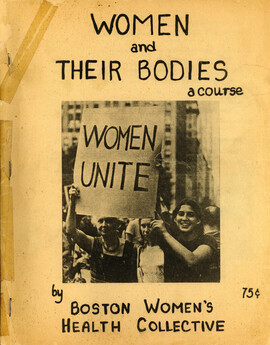
In 1970, they worked with the New England Free Press to publish a 193-page course book on stapled newsprint titled “Women and Their Bodies."
The book was revolutionary for its frank talk about sexuality and abortion, which was then illegal. The cost: 75 cents.
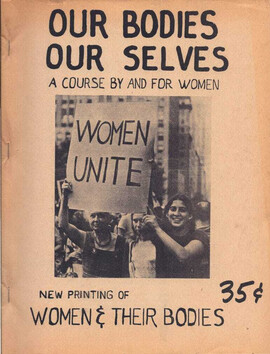
In 1971, they changed the title to “Our Bodies, Ourselves” to emphasize women taking full ownership of their bodies. The cost this time around: 30 cents. The book quickly became an underground success, selling 225,000 copies, mainly by word-of-mouth.
Several larger publishers expressed interest in the book. In 1972, after strenuous debate, the group of founding authors decided to publish with Simon & Schuster in order to reach a wider audience. They formally incorporated as the Boston Women’s Health Book Collective and negotiated a contract that included a 70 percent clinic discount for low-income women and provision for a U.S. Spanish translation.
The Expanded "Our Bodies, Ourselves"
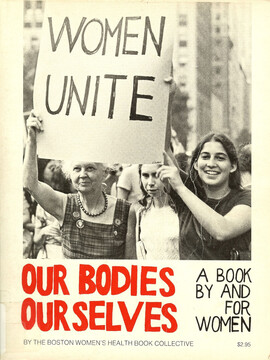
The first commercial, expanded edition of “Our Bodies, Ourselves” was published in 1973. The preface and the first chapter, “Our Changing Sense of Self,” are available online.
That same year, Christopher Lehmann-Haupt reviewed the book for The New York Times. He had some “quibbles.” (We blogged about it in 2013, on the review’s 40th anniversary.)
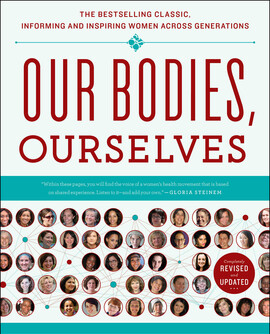
The 2011 Edition
For forty years, “Our Bodies, Ourselves” was updated and revised approximately every four to seven years. The most recent edition was published in 2011.
The book has sold millions of copies and received numerous honors. Library Journal named the 2011 edition one of the best consumer health books of the year. Also in 2011, Time magazine recognized “Our Bodies, Ourselves” as one of the best 100 nonfiction books (in English) since the founding of Time in 1923. In 2012, the Library of Congress included the original “Our Bodies, Ourselves” in the exhibit Books That Shaped America, a collection of 88 nonfiction and fiction titles “intended to spark a national conversation on books written by Americans that have influenced our lives.”
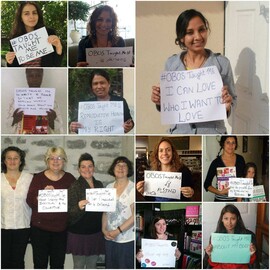
Our Bodies Ourselves Global Partners
Ever since the 1970s, when “Our Bodies, Ourselves” became a bestseller in the United States, women’s groups around the world have translated and adapted it for women in their own countries.
As of July 2024, resources based on the book have been developed in 34 different languages.
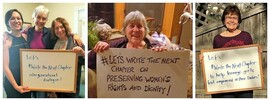
The Women
For many years, hundreds of people, including book and web content contributors, board members, advisory board members, founders, staff, and consultants collaborated to produce and promote evidence-based information on girls’ and women’s health and sexuality. This information, distributed through Our Bodies Ourselves's publications, website, and blog, also addressed the social, economic, and political conditions that affect health care access and quality of care. This contextual information has inspired readers to learn more about — and work to change — the attitudes, policies and laws that affect their own and their family’s well-being.
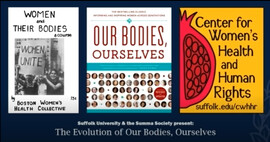
Our Bodies Ourselves Today
In 2018, the nonprofit Our Bodies Ourselves and Suffolk University’s Center for Women’s Health and Human Rights began a partnership to develop Our Bodies Ourselves Today, a new online platform that features updated, curated, and inclusive information about the health and sexuality of women and gender-expansive people.
In 2025, the two groups integrated and the nonprofit organization closed. The Center for Women’s Health and Human Rights is now the official home of Our Bodies Ourselves.

Since its inception, Our Bodies Ourselves has had a tremendous impact on the lives, health, and human rights of women across the world.
