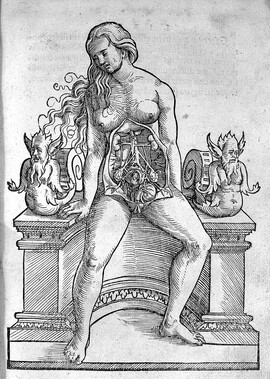
The History of the Word "Vagina" Illuminates Our Persistent Problem With Biased Reproductive Health
Science has been historically slow to understand the female reproductive system, as health writer Elizabeth Hlavinka discusses in this article. And too often research still perceives the male body is perceived as the norm -- just as it was by the ancient Greeks.
Even our language betrays the sexist bias of reproductive health studies. Early scientists often used terms for female genitalia that translate as "shameful parts." The word "vagina" itself, first recorded in 1680, comes from the Latin word for "sheath." The term's origins reflect a view of the vagina as merely a holder for the penis.
Our Bodies Ourselves, and the broader women’s liberation and women’s health movements, dramatically increased knowledge about women’s bodies as well as access to birth control and abortion in the 1970s. But we now find ourselves in a time of backlash. Many women, and medical providers, still lack basic knowledge of sexual health. And open discussion of sexuality is increasingly censored, including online. As a result, issues common to women, such as bacterial vaginosis, go undiagnosed and untreated. Menopause symptoms and vaginal pain are not taken seriously.
We need full, accurate health education as well as an equitable healthcare system that values women’s bodies. Funded research on sexual health must continue. And when we talk about women’s health, we must take the importance of pleasure and quality of life into account.
The more we can get clear on language and normalize that 50% of the population has this anatomy and that lots of things can change and go wrong with their medical parts just like the heart and the lungs, then people can understand that they don’t have to put up with being ignored or minimized when they have complaints or issues. They can actually advocate for themselves.
SOURCE: Salon • AUTHOR: Elizabeth Hlavinka • LAST UPDATED: September 17, 2023