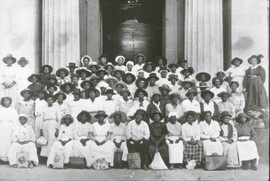
Call the Midwives—Assuming Any Are Left
While both the US and the UK had similar rates of midwife-attended births in the nineteenth century, they soon moved in opposite directions. In this article, Ellie Rose Mattoon traces the historical factors that contributed to the diverging paths of midwifery care in the US and the UK.
Prior to the development of the field of obstetrics and gynecology, midwives were the primary providers of maternal care. As the number of white male doctors and their technology grew, this began to shift. Doctors competed with midwives, blaming them for maternal mortality. In the US, they used racist and xenophobic stereotypes to discredit the many midwives who were European immigrants and women of color.
In this climate, both the US and the UK began to require midwives to undergo training and get specific credentials. The UK passed the Midwives Act of 1902 despite some pushback, and began the process of certifying midwives. Despite the new obstacles, the presence and role of midwives continued to expand. However, today, midwives are in decline in the UK, citing concerns about understaffing and care quality.
In the US, the 1921 Sheppard-Towner Act likewise aimed to train and certify midwives. But there were different consequences given the racial and ethnic demographics of midwives in the US. Programs excluded midwives who were immigrants and women of color, while penalizing those same women for not complying. The stigmas around cultural and traditional methods of healing increased. These developments drastically affected the number of midwives available, and women turned to hospitals for their maternal care. Currently, there is a growing movement to return to midwives for maternal care, especially in communities of color.
Around 1910, the rate of midwife-attended deliveries was the same in the UK and US, at approximately half of all births. But the declining birth-rate among the upper-class meant that increasingly such families could afford doctors rather than midwives for their deliveries. Moreover, the increasing use by physicians of “twilight anesthesia”—a combination of morphine and scopolamine—promised mothers a less painful labor than what midwives could offer. This reality challenged the practice of midwifery in both countries.
SOURCE: JSTOR Daily • AUTHOR: Ellie Rose Mattoon • LAST UPDATED: November 6, 2024