Ripping Off the Bracelet
"I left the offices endlessly bothered by the knowledge that countless other women would be subjected to the same casual callousness I had faced, and outraged by the reality."
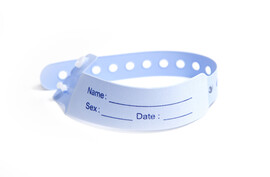
The first time I fought to have my voice heard in a medical setting, I was three years old, the newest patient in the Pediatric Oncology ward. Following my diagnosis of Acute Lymphoblastic Leukemia in 2008, many aspects of my life suddenly became disorienting and uncomfortable, but I took an immediate dislike towards the irksome patient identification bracelet that sliced into my skin all day and night. Feisty and fed up with my complaints being ignored, I decided that the only reasonable course of action in the face of such unconcerned caregiving was to rip the paper bracelet right off. While I was immensely proud of myself for solving this problem, my path of direct action was soon blocked by staff with a much better understanding of my circumstances and access to bracelets with a lock and key.
Despite the fact that I did not win that particular battle, this incident set the stage for the way I have engaged with the medical world in the time since. Throughout my 56 day stay on the Oncology floor and over the two and a half years of enduring active treatment — complete with multiple trips to the clinic a week, chemotherapy sessions before kindergarten playtime, and full sedation procedures every Friday — I fought for recognition from all who interacted with me. Though I was little, childhood cancer demands that you grow up fast, and I was the person at the center of it all. Only I could answer how I was feeling, if that new drug made me nauseous, or if I had any concerning new aches and pains, so I found it to be absurd when doctors would attempt to speak strictly to my parents as if they were the ones living inside my rebellious body.
When I thankfully went into remission in 2010, I was beyond relieved and excited to leave painful procedures and even more painstaking conversations with doctors who looked right through me behind. Though I had some perplexing, persistent side effects from my experimental trial treatment — I remain immunocompromised to this day, eighteen years later — and would require regular follow-ups for the rest of my life, my newly healthy era ahead looked promising.
Unfortunately, the dream of a calm, pain-free life did not last long.
At the end of the summer in 2015, I contracted a particularly nasty bout of pneumonia, which stuck around for months and months on end, thanks to my perpetually weakened immune system. Shortly into my illness, my symptoms began to increase in intensity and shift away from what is typically expected of a pediatric pneumonia case into a post-viral mystery that continuously perplexes my team. A slight lack of energy transformed into bone-crushing fatigue, which confined me to my bed, migraines and vertigo suddenly caged my brain, and a widespread, insistent pain like fire in my limbs and ants under my skin consumed my entire body.
As my family and I attended endless doctors appointments hoping that someone out there would acknowledge my pain, know why it was happening, and how we could fix it, two dreadful sentences rapidly became the refrain of my life: “Well, you know how young women are!” and “This is mainly a women’s issue, so there’s not much research or treatment available.” Each of these sentiments sparked their own unique irritation within me, which quickly turned into inspiration.
Every time I sat in a doctor’s office, exhausted, in pain, and desperate for any small form of relief, only to be met by a so-called-professional who barely took a moment to glance at my chart before giving a patronizing shrug and a misogynistic remark about “knowing how young women are,” I couldn’t help but think of every other unlucky patient they would see that day. Though I was momentarily stunned the first time this was said to my face, I soon began demanding further explanations of how exactly young women are, what that means in terms of my medical history, and how frequently other patients seeking help are given the ever-so-enlightening diagnosis of Teenage Girl or Young Woman. Frequently, doctors realized that there was nothing more they could say without further putting their foot in their mouths and hastily left the rooms. Slightly less frequently, I got to be on the receiving end of a lecture on the obvious fragility and hysterically anxious tendencies of the weaker sex, though these doctors were far less willing to put this belief into ink next to their name on my permanent record than to say it out loud.
On the rarer occasions when a doctor would earnestly listen or impart truly helpful knowledge, the excitement that came from the possibility of pain relief was swiftly dimmed by the sharing of the fact that the suspected conditions mostly impact women, so they are grossly under-researched. In all these instances, I left the offices endlessly bothered by the knowledge that countless other women would be subjected to the same casual callousness I had faced, and outraged by the reality that women around the world have been largely abandoned by our patriarchal society and left to suffer in the shadows.
After years of continuing in my search for both pain relief and competent medical professionals, I was eventually able to assemble a knowledgeable care team who have cobbled together some ever growing rough draft diagnoses — Neuropathy, Amplified Musculoskeletal Pain Syndrome, Dysautonomia, Chronic Fatigue Syndrome, and Fibromyalgia, all likely related to my life saving cancer treatment — as well as Endometriosis, which is likely unrelated, but not helped by everything else. In discovering these tentative answers and corresponding treatments, I have been able to take back my life and pursue a path that allows me to tackle as a professional the societal problems that plague me so. Currently, I am a senior at the top of my class studying political science at Suffolk University, and a volunteer with numerous organizations that work to strengthen women’s and gender expansive individual’s health and human rights, such as Our Bodies Ourselves and Reproductive Equity Now. It is my hope to transform the difficulties I have experienced into knowledge, passion, and hope for others who are struggling with medical hardships, and create policy changes that leave the world a better place for all those in need.