When the Refugee Crisis Isn't Temporary
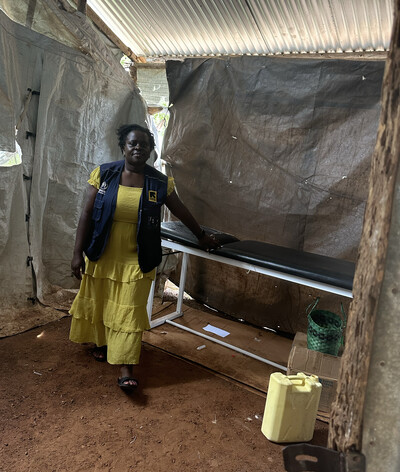
Our Bodies Ourselves global partner and former Board of Directors chair Diana Namumbejja Abwoye served as an observer at Palabek refugee settlement in northern Uganda. Her article for the magazine "Critical Forced Displacement," asks us to rethink the way we respond to disasters and forced migration. Abwoye emphasizes the urgent need to design health systems not just for survival, but for longevity.
About 80,000 refugees, most from South Sudan, currently live at Palabek and will likely remain there for many years. Yet the settlement's health facilities were designed for short-term emergency use eight years ago, and they remain dangerously limited.
"What became immediately clear to me was not only the scale of unmet health needs, but how routine and long-standing those needs have become," Abwoye writes. The structures themselves are temporary. Health services focus only on infectious diseases, neglecting preventative care like screenings for diabetes, cervical cancer, and breast cancer. Abwoye notes the sore lack of access to good nutrition, ambulances, and pregnancy and birth care.
“I met women whose births were not assisted by skilled providers but by neighbors and friends. One woman told me she gave birth by the roadside, helped only by a neighbor. These stories were not rare — they were reflections of a system stretched thin and designed to respond to crisis, not continuity.”
The failure to provide preventive care in refugee settings violates basic human dignity, human rights, and human needs.