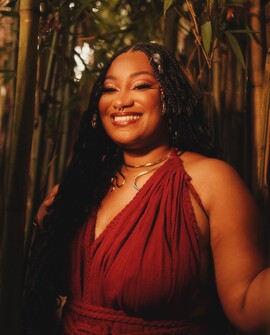
Why Black Women’s Disordered Eating Is Overlooked
People of color are less than half as likely to be diagnosed with disordered eating, compared to white people. In this podcast episode, Alishia McCullough discusses her own journey with disordered eating and how it has informed her mental health work around body liberation. McCullough is a licensed clinical mental health therapist and the author of “Reclaiming the Black Body, Nourishing the Home Within.”
In the interview, Alishia McCullough discusses how her family, culture, and environment shaped her relationship with food. Messages around scarcity, beauty, and success contributed to her experience of anorexia nervosa. Furthermore, her thinness was praised by doctors, and her symptoms were overlooked. McCullough notes that Black women she has worked with have shared similar experiences as it relates to their symptoms being overlooked. Larger Black women even shared that their doctors encouraged their disordered eating for the sake of losing weight.
Once Alishia McCullough recognized her disordered eating, she began her journey to body liberation. This included attending to ancestral histories of good relationship to the land and recognizing generational trauma that contributed to undernourishment. Her own journey has inspired her work with others. On Black women and disordered eating, she emphasizes that anybody can experience disordered eating. It’s not just the thin white person overwhelmingly presented in the media. She also notes how important it is to know the symptoms of disordered eating. The pressure on BIPOC people to look white can complicate or hide these symptoms. Overall, our bodies know what they need, and we must learn to listen to them and trust them.
I even, being a grad student, had so much stigma associated with words like disorder, diagnoses, because those were just experiences that were not talked about in my community, in my family, and so there was a dissonance for me… I'm learning about these things, but I didn't know I could be impacted by the same diagnosis that I'm learning about in school.
SOURCE: WUNC: North Carolina Public Radio • AUTHOR: Alishia McCullough, Anita Rao, Kaia Findlay, and Wilson Sayre • LAST UPDATED: March 21, 2025