What We Still Don't Know About Periods
This article by Yasmine AlSayyad in The New Yorker sums up new efforts to better understand periods and the female reproductive system. The stigma around menstruation, and menstrual blood, has held back medical research on endometriosis and other menstrual-related disorders. The myth that menstrual blood is toxic continues to affect research today.
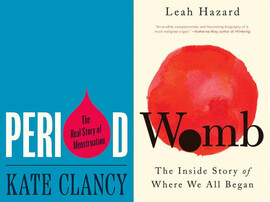
AlSayyad spotlights two recent books that overcome that stigma: "Womb" by midwife Leah Hazard, and "Period" by biological anthropologist Kate Clancy. "Womb" reflects Hazard's experience in labor wards. In "Period," Clancy discusses what can be learned from our menstrual cycles. Both Hazard and Clancy urge us to view our bodies' capabilities with awe rather than disgust.
Dr. Margherita Yayoi Turco, a researcher then at the University of Cambridge who was working on a placental “organoid,” tiny placental tissue that can, under the right conditions, form mini-placentas in a dish, and be analyzed for its response to different drugs and hormones. Despite the importance of placental development for a successful pregnancy, garnering support for her work was difficult. “When I came into this field, it was really clear that it was hard to find funding,” she tells Hazard. “The placenta? It’s mostly, like, ‘Who cares? We just throw it away.’ ”
SOURCE: The New Yorker • AUTHOR: Yasmine AlSayyad • LAST UPDATED: April 12, 2023