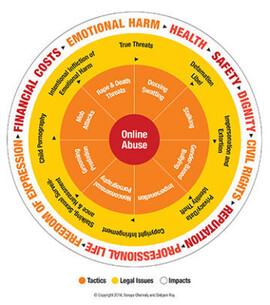
Online Abuse 101
This article from the Women’s Media Center Speech Project provides an overview of online abuse. It defines several tactics used by abusers, and it addresses myths around online abuse as experienced by women.
Online abuse is the targeting of people online. Online abuse include defamation, doxing, hate speech, swatting, and unsolicited pornography.
When online abuse occurs against women, it is often referred to as cybersexism or cybermisogyny. It is a form of gender-based violence, because it targets women specifically because of their sex. Online abuse against women is often more severe and gendered. Women may be sent gendered slurs or unsolicited pornography. Online abuse is also affected by other intersecting identities, such as race and ethnicity, sexuality, and disability.
Online abuse can further complicate the lives of women. We must weigh the costs of engaging online. Women who are online may be concerned about their safety and their family’s safety. They may also experience emotional and psychological distress because of harassment. Women may not engage online for fear that their privacy will be violated. These fears extend beyond our personal lives to our professional lives as well.
When men face online harassment and abuse, it is first and foremost designed to embarrass or shame them. When women are targeted, the abuse is more likely to be gendered, sustained, sexualized and linked to off-line violence.
SOURCE: Women's Media Center Speech Project