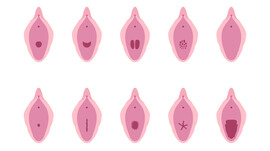
My Corona: The Hymen & the Myths That Surround It
There are myths and misconceptions about the vaginal corona, which is also known as the hymen. One major misconception is that the vaginal corona can be used to determine whether a person is a virgin.
This Scarleteen article provides an overview of the vaginal corona and answers questions about its relationship to virginity.
The vaginal corona consists of folds of mucous tissue and is located a few centimeters inside the vaginal opening. The appearance varies in size, shape, and color.
What happens when something enters the vaginal corona for the first time? What if it's a tampon, finger, sex toy, or penis? The experience is unique to each person. Some people may feel pain. Less than half of people bleed, and bleeding is rarely a result of the stretching of the tissue.
It is impossible to determine if a person has engaged in vaginal intercourse by looking at the vaginal corona. Contrary to myths, the vaginal corona is not something that can be broken even though stretching it can lead to ruptures. The concept of virginity varies by person and culture, and it does not determine our worth or value.
The various myths and the incorrect assumption that there is a covering membrane have given rise to expressions such as “breaking the hymen” and “deflowering.” These usually refer to a person having their vagina entered for the first time, either by themselves or by having sex with a partner. What’s actually there is the vaginal corona, consisting of elastic folds of mucous tissue, which can’t be ruptured or broken in one fell swoop by a penis or any other object inserted into the vagina.
SOURCE: Scarleteen Magazine • AUTHOR: Anna Knöfel Magnusson/RSFU • LAST UPDATED: July 31, 2025