Tanzania: Tanzania Home Economics Association
Booklet 1: Afya Ya Uzazi | Booklet 2: Mahusiano Na Magonjwa Ya Ngono
(Translation: Booklet 1: Reproductive Health | Booklet 2: Relationships and Sexual Transmitted Diseases)
Publication Language: Kiswahili
Publication Date: 2013
"Our Bodies, Ourselves" Project
In 2013 and 2014, Tanzania Home Economics Association (TAHEA) published two Kiswahili booklets that include eleven chapters based on "Our Bodies, Ourselves".
The booklets integrate input from grassroots and institutional allies across the country — community elders and traditional healers as well as government officials and academics. As a result, they reflect a broad set of needs, experiences and expertise. Given the buy-in, and TAHEA’s own networks, the booklets have a secure distribution channel to Kiswahili-speaking countries across East Africa.
The OBOS Global Initiative provided ongoing technical support, including guidance on fundraising, sub-grants from donors, and promotion.
Asia Kapande, a professional home economist, attended OBOS’s 40th anniversary symposium in 2011 and took part in a panel on the making of “Our Bodies, Ourselves,” which can be viewed online.
Kapande has more than four decades of leadership in food and environmental security, poverty reduction, health, and gender equality, and continues to make a difference through her work with TAHEA, the Nile Basin Discourse, the Tanzania Nile Discourse Forum, and several primary and secondary school committees.
Community Action & Activism
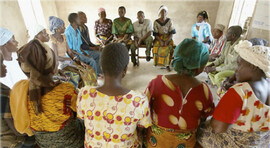
The Tanzania Home Economics Association (TAHEA) was established in 1980 to improve the quality of life for women and their families in rural and semi-urban Tanzania. Started by a group of 17 home economists, the organization’s membership currently exceeds 1,000 individuals and institutions across the country.
Its outreach includes reproductive and sexual health awareness-building, maternal and infant health, HIV/AIDS mitigation, education for orphan girls, food security, savings and credit, and environmental protection. The organization also conducts related research and surveys and produces informational material for distribution, of which the “Our Bodies, Ourselves”-based booklets are one example.
TAHEA provided copies of the booklets to the Ministry of Health and encouraged policymakers to integrate the resources into the country’s educational system. The organization distributed copies to its national network, reaching women and girls in local schools and health institutions.
Wider distribution is in the pipeline; the long-term goal is to reach Kiswahili-speaking countries across East Africa, including Kenya, Uganda, Burundi, Rwanda, Congo, Malawi, Zambia and Mozambique.
Online Content
Kujifungua (“Baby Delivery”)
Kujifungua Mtoto Aliyefariki (“Stillbirth”)
Machaguo Ya Uzazi Kufikiria Kuwa Mzazi (“Becoming a Parent”)
Magonjwa Yanayoambukizwa Kwa Njia Ya Ngono (“Sexually Transmitted Infections”)
Mahusiano Na Wanaume (“Relationships with Men”)
Mapenzi Salama (“Safe Love”)
Ugumba Na Uzazi Wa Kusaidiwa (“Infertility and Assisted Reproduction”)
Ujauzito (“Pregnancy”)
Ujauzito Usiotarajiwa (“Unexpected Pregnancy”)
Umri Wa Makamo Na Kukoma Kwa Hedhi (“Becoming an Adult and Ceasing to Menstruate”)
Virusi Vya Ukimwi Na Ukimwi (“HIV/AIDS”)
How to Obtain a Print Copy
For information on obtaining print copies of the Kiswahili adaptation, please contact Tanzania Home Economics Association: [email protected]
Contacts
Website: http://www.tahea.or.tz/
Email: [email protected]
PO Box 11242, Mwanza, Tanzania
Phone: +255-0-754-579289
Email: [email protected]
Phone: +255-0-754-443226