Breast Cancer Screening and Diagnosis

This content originated with the education and advocay nonprofit, Breast Cancer Action.

Screening vs. Surveillance
A large percentage of breast cancers are found by people and their partners, and we encourage everyone to be familiar with your body. However, there is a difference between getting suspicious symptoms checked out and actively looking for cancer when there are no symptoms.
Screening and surveillance are terms to describe looking for early signs of breast cancer in people who do not have symptoms. Neither screening nor surveillance can prevent breast cancer, but both aim to catch the disease in its early stages, when it is sometimes more treatable.
Screening is the term used to describe looking for early signs of breast cancer in women at average risk of developing the disease and who have no symptoms. Average risk means women who do not have a prior history of breast cancer, do not have a significant family history, and who have no other known risk factors.
Surveillance is the term used to describe monitoring women at higher-than-average risk of developing breast cancer. Women with a higher risk may have been diagnosed with breast cancer in the past, have a BRCA mutation, or have other known risk factors. Mammograms and MRIs can both be used for surveillance.
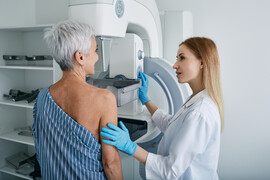
Mammograms and self-exams are both used for screening. Mammograms, x-ray images of breast tissue, are the most widely-used tool for routine breast screening, and for years, breast self-exam was promoted as part of an awareness and screening strategy. But today, research shows, and many doctors acknowledge that breast self-exams are not a reliable way to find breast cancer, nor do they improve survival if they lead to a breast cancer diagnosis.
Although it might seem like a good idea to look for early signs of breast cancer, it’s important to weigh the risks and potential benefits for all medical tests and procedures. Many people are surprised to learn that routine screening for breast cancer carries some common harms and risks, as well as potential benefit. Some of the documented harms and limitations of routine mammography screening include:
Overdiagnosis
The identification of a cancer that is not and never will be life-threatening is called overdiagnosis and usually leads to overtreatment. According to several large studies, more than 1 in 5 (20%) of all breast cancers found by routine mammograms is due to overdiagnosis.
Overtreatment
Overtreatment is when a person receives more treatment than they need, or more than helps them. This can happen when someone receives treatment for an extremely slow growing (indolent) cancer that will not become symptomatic, let alone life-threatening. It turns out that finding and treating more early-stage breast cancers does not necessarily save more lives. It’s important when evaluating the efficacy of a medical intervention to ask not just if more people are diagnosed, but if these people are helped by being diagnosed and treated.
False Positive
A screening mammogram that looks abnormal even though there is no cancer is called a false positive. False positives require follow-up procedures to determine whether the abnormality is cancer and can lead to scarring, stress, and additional financial costs.
False Negative
A screening mammogram that looks normal even though there is in fact breast cancer is called a false negative. Routine screening mammograms miss about 1 in 5 (20 %) of invasive breast cancers.
Mammograms
Despite widespread adoption, routine mammography screening has not been shown to reduce deaths overall (all-cause mortality) or reduce the number of women diagnosed with advanced breast cancer. Research has also found that neither self-exam nor clinical exam done by a trained healthcare provider reduce deaths from breast cancer. It is more likely that a woman will be overdiagnosed and overtreated as a result of a routine mammogram than that the mammogram will help her avoid death from breast cancer.
In order to make informed decisions we believe that each person should understand the harms and benefits associated with screening to determine if, when, or how often they participate in a screening process.
Diagnostic Tests
While screening and surveillance tests look for cancer when there are no symptoms, diagnostic tests are used to find out if existing symptoms are caused by breast cancer.
Mammograms may be used to help diagnose breast cancer. Screening, surveillance, and diagnostic mammograms all use the same technology. While a diagnostic mammogram may help rule out cancer, a biopsy to check for cancerous cells is usually needed to know for sure if a symptom is breast cancer.
To learn more about your specific cancer and get important information to help with treatment options, your healthcare provider may recommend additional tests. For example, a full body CT or PET scan may be done to check if the cancer has spread to other parts of the body.
Some tests may also be done on tissue removed through a biopsy or in surgery to learn more about the specific type of cancer. For example, the cells will be tested for estrogen or progesterone receptors and for higher than average levels of the HER2 growth-promoting protein. Note: there are several ways to test for HER2 status. If your HER2 test results are borderline, it’s a good idea to ask if another HER2 test makes sense for you.
Genomic tests, such as Oncotype DX and MammaPrint, are increasingly used to help identify which patients are likely to benefit from chemotherapy, thereby reducing overtreatment of patients who are unlikely to truly benefit. These tests look at the activity of many genes at the same time in order to predict how aggressive the cancer is, how likely it is to come back or spread to other parts of the body, and whether aggressive treatment such as chemotherapy is needed.
People with a family history of breast or ovarian cancer, or who have other risk factors, may be recommended for genetic testing to find out if they have an inherited mutation on their BRCA1 or BRCA2 genes. Genetic testing is complex and can raise as many questions as it answers, and we strongly recommend that anyone considering genetic testing seek independent professional genetic counseling before deciding whether to be tested, and consult with a genetic counselor after testing to walk through test results, what they mean, and to best understand their impact on your options.
Not everyone needs or is a candidate for all of these tests. Your healthcare providers will suggest specific tests based on your circumstances and symptoms.
Cancer is not your fault!